
research use only marketing, peptide marketing,

10 Best Advertising Agencies for Peptide Brands

10 Best Advertising Agencies for Peptide Brands

Choosing an advertising agency for a peptide brand is not the same as hiring a general DTC media buyer. The agency has to understand demand generation, but it also needs a working awareness of platform policy, claim discipline, landing page review, payment friction, lead quality, and the difference between clinics, research-use-only ecommerce, supplement-adjacent wellness brands, and medical weight loss providers.

This list is not a legal endorsement or a claim that every agency is right for every peptide business. It is a practical buyer’s guide. Some agencies are peptide-specific. Some are better fits for clinics. Some are broader healthcare or supplement agencies that may fit adjacent peptide brands. The right choice depends on business model, claims, geography, budget, compliance review, and growth stage.

Selection Criteria

The best peptide advertising agencies should be evaluated by more than screenshots and revenue claims. Ask how they handle claim review, platform policy risk, landing pages, source attribution, lead quality, rejected ads, account stability, and post-click conversion. Ask whether they understand the difference between research-use-only positioning and patient-facing clinic marketing. Ask what they will not advertise.

That last question matters. In peptide advertising, an agency that promises it can run anything may be creating more risk than value.

1. The AD Leaf Marketing Firm

The AD Leaf is a strong fit for peptide clinics, wellness providers, medical spas, research peptide brands, supplement-adjacent companies, and healthcare organizations that need more than media buying. The agency can support paid search, paid social, SEO, landing pages, content strategy, website development, email, tracking, and reporting.

The advantage is system thinking. Peptide ads usually perform better when they are connected to a broader trust architecture: compliant landing pages, patient or customer education, search visibility, clear offers, lead tracking, and follow-up. The AD Leaf’s peptide cluster includes marketing agency for peptides, peptide advertising agency, research-use-only peptide ads, and peptide clinic marketing agency pages, which gives the brand a stronger topical foundation than a one-channel ad shop.

Best fit: peptide brands that need a full marketing system, not only ad account management.

2. Peptide Marketing

Peptide Marketing positions itself as an agency focused on peptide brands and research-chemical companies. Its public site claims category specialization, active peptide brand engagements, and global market experience.

That niche focus may be useful for research-use-only ecommerce brands that want an agency familiar with the category’s language, operational friction, and growth constraints. As with any peptide-specific agency, brands should still ask detailed questions about policy compliance, claim review, payment processing, fulfillment assumptions, and account-risk practices.

Best fit: research peptide brands looking for a category-specific growth partner.

3. Peptide Ads

Peptide Ads describes itself as a growth marketing agency built for research peptide brands, with services around paid media, funnels, static creative, email, and supporting ecommerce infrastructure.

The positioning is narrow, which can be valuable if the brand is specifically operating in research peptide ecommerce. A clinic, medical spa, or patient-facing provider should confirm whether the agency’s approach fits healthcare consultation marketing, not only ecommerce funnel growth.

Best fit: research peptide ecommerce brands that need paid media and funnel support.

4. PepAds

PepAds presents itself as a white-glove growth agency for peptide brands, with messaging around paid ads, subscriptions, payment processing, and fulfillment support.

That can appeal to peptide ecommerce brands where advertising performance is tied to more than creative and targeting. Payment processing, subscription flow, and fulfillment can affect conversion and retention. Brands should ask how those services are structured and what compliance guardrails are used.

Best fit: peptide brands that need growth support beyond media buying.

5. Pro Marketer

Pro Marketer has a peptide marketing and advertising service page for research peptide companies, wellness clinics, and DTC peptide brands. Its public positioning emphasizes category expertise, compliant execution, and performance strategy.

This may be a reasonable fit for brands that want a specialized but more general marketing partner across SEO, ads, and conversion work. Buyers should review case studies, clarify whether the agency has experience with their exact business model, and ask how claim review is handled.

Best fit: peptide and wellness brands looking for a specialized marketing partner.

6. Icarus Digital Marketing

Icarus Digital Marketing lists peptide brand advertising services and positions its offer around full-stack paid acquisition, persona research, creative, and campaign management.

Its focus on audience research may be useful for brands selling into highly specific research or wellness communities. The key due diligence question is how the agency turns that audience language into compliant ad copy and landing pages without crossing into unsafe or unsupported claims.

Best fit: peptide brands that need paid acquisition and audience research.

7. Ketamine Lead Gen

Ketamine Lead Gen has a peptide marketing page aimed at wellness and peptide clinics. The agency’s adjacent focus on ketamine and clinic lead generation may make it relevant for providers that operate in sensitive healthcare-adjacent categories.

Clinic brands should evaluate whether the agency can support consultation-focused landing pages, local SEO, call tracking, staff workflow, and cautious claims. Peptide clinic marketing is not the same as ecommerce marketing, and the agency should be able to explain that difference clearly.

Best fit: wellness clinics and peptide providers that want patient lead generation support.

8. Nexamed

Nexamed publishes peptide marketing guidance and positions itself around medical and wellness marketing. Its public content argues for sustainable compliance strategy rather than short-term ad-account workarounds.

That point is worth considering. Peptide brands should be wary of agencies that depend on temporary account tactics, disposable accounts, or vague promises about bypassing reviews. A sustainable marketing partner should be able to explain how it reduces risk, not only how it gets campaigns live.

Best fit: peptide clinics and medical wellness brands that want a compliance-aware marketing partner.

9. Supplement Launchpad

Supplement Launchpad is not peptide-specific, but it focuses on supplement and nutraceutical advertising, including Facebook Ads, Google Ads, CRO, copywriting, and creative strategy. That may make it relevant for supplement-adjacent peptide brands or brands operating closer to wellness ecommerce than clinic care.

This is not the right fit for every peptide business. If the brand is patient-facing, prescription-related, or research-use-only, it should confirm the agency understands the correct regulatory and platform boundaries before engagement.

Best fit: supplement-adjacent brands that need ecommerce advertising and CRO.

10. PIXACORE

PIXACORE is a healthcare marketing and medical communications agency rather than a peptide-specific performance shop. Larger healthcare, biotech, pharmaceutical, or science-backed organizations may need that kind of communications depth more than a direct-response ad agency.

For early-stage peptide ecommerce brands, PIXACORE may be too broad or enterprise-oriented. For regulated healthcare organizations with complex stakeholder review, medical communications needs, or brand strategy requirements, it may be worth evaluating.

Best fit: larger healthcare or science-driven organizations that need strategic healthcare communications.

How to Choose the Right Agency

Start by naming your category. Are you a clinic, research-use-only brand, supplement brand, telehealth company, medical weight loss provider, or healthcare organization? Then ask agencies how they handle the exact constraints of that category.

Review the landing page process. Ask who writes copy, who approves claims, how rejected ads are handled, how lead quality is measured, and what the agency does when a campaign cannot safely make the claim the brand wants to make. Strong agencies will have boundaries. Weak agencies will make everything sound easy.

Finally, choose the agency that matches the business problem. If you need a full-funnel growth system, choose a partner with SEO, landing page, tracking, and content depth. If you only need paid media for a research ecommerce brand, a niche ad partner may be enough. If you need medical communications, a healthcare agency may be the better fit.

FAQ

What makes an agency good for peptide brands?

A good peptide advertising agency understands campaign performance, claim discipline, platform policies, landing pages, lead quality, and the specific difference between clinics, research-use-only brands, supplement brands, and medical weight loss providers.

Should peptide brands hire a niche agency?

Sometimes. Niche experience can help, but brands should still evaluate whether the agency’s methods are sustainable, compliant, and appropriate for the exact business model.

Can a general healthcare agency advertise peptides?

Possibly, especially for healthcare organizations that need careful communications. But a general healthcare agency may not always understand peptide-specific ecommerce, RUO positioning, or performance advertising constraints.

What questions should peptide brands ask before hiring?

Ask about platform policies, claim review, landing page review, ad rejection handling, tracking, lead quality, reporting, and what the agency refuses to promote.

Sources

Peptide Clinic Marketing agency, marketing for peptides

5 Marketing Tips for Peptide Brands

5 Marketing Tips for Peptide Brands

Peptide brands do not need more noise. They need a marketing system that builds trust, explains the offer carefully, captures qualified demand, and protects the business from careless claims. That is true whether the brand is a clinic, research-use-only ecommerce company, supplement-adjacent wellness brand, medical spa, or weight loss provider.

Advertising is only one part of that system. If the website is thin, the content is vague, the emails overpromise, the reviews are weak, or the landing pages do not explain the next step, paid media has to work too hard. Strong peptide marketing is built around clarity.

Here are five marketing tips that help peptide brands grow without turning the category into hype.

1. Build the Content Map Before the Campaign Calendar

A peptide brand should not publish random posts just because a keyword has volume. Start with the content map. Decide which page owns the main commercial intent, which pages support treatment-specific or product-category demand, which pages explain the consultation or ordering process, and which articles answer educational questions.

For The AD Leaf’s peptide cluster, the commercial anchors include pages like peptide marketing agency, peptide advertising services, peptide SEO services, and research peptide marketing. A brand can use the same logic for its own site: parent page, service page, product or treatment page, educational article, conversion page.

This structure helps avoid duplicate content and gives prospects a clearer path. A patient-ready clinic page should not read like an RUO ecommerce page. A treatment-specific article should not try to own every general peptide query. Each document needs a job.

A practical content map should also identify what the brand should not publish. Some search queries may have demand but invite risky medical claims, unqualified usage advice, or content that conflicts with the business model. A research-use-only brand should not chase patient treatment queries. A clinic should not publish medication or protocol advice that belongs to a provider consultation. A supplement-adjacent brand should not use content to imply drug effects.

This restraint is part of authority. Strong brands do not answer every possible question just because people ask it. They answer the questions that fit their role, then route sensitive questions toward appropriate professional review.

2. Treat Trust as a Conversion Lever

Peptide marketing is not only about rankings and ads. Prospects are evaluating legitimacy. They look at the website, reviews, provider information, claims, contact details, ordering or consultation process, and how the brand handles sensitive questions.

Trust signals should be specific and real. Use provider credentials where appropriate, explain the consultation process, clarify research-use-only boundaries where relevant, show clear contact paths, and keep the language calm. Avoid exaggerated promises, miracle framing, and vague “science-backed” language that is not supported on the page.

A trust-first page can still convert. In this category, it often converts better because prospects are actively trying to avoid sketchy providers, unclear products, and overhyped claims.

Trust also depends on consistency. If the homepage describes the brand one way, ads describe it another way, emails use more aggressive language, and staff answer calls differently, prospects notice. So do reviewers. The brand should maintain one approved messaging system across the website, ads, profiles, landing pages, emails, and sales or intake workflows.

For clinics, trust may come from provider oversight, location clarity, reviews, consultation explanation, and staff responsiveness. For research brands, trust may come from documentation, product handling information, clear research boundaries, and customer support. For supplement brands, trust may come from claim substantiation, ingredient transparency, and realistic expectations. The exact trust signals change by model, but the need for specificity does not.

3. Use SEO to Answer the Questions Ads Cannot Carry

Ads have limited room and heavy scrutiny. SEO content gives peptide brands more space to educate, qualify, and set expectations. That is why organic content is so important in this category.

A strong SEO program can include clinic pages, research category pages, service pages, FAQs, comparison content, landing pages, and educational articles. The content should answer what the prospect needs to know before taking the next step, while staying out of medical advice and unsupported claim territory.

For clinics, that may include consultation process, eligibility review, provider supervision, pricing factors, appointment expectations, and follow-up communication. For research-use-only brands, that may include ordering process, documentation, storage information, quality controls, and research-only boundaries. For supplement or wellness brands, that may include ingredient education, substantiation, usage boundaries, and compliant positioning.

SEO should also support AI search visibility. Buyers increasingly ask AI systems to explain provider categories, compare options, summarize risks, and identify what questions to ask before contacting a brand. A peptide brand with thin pages, inconsistent naming, and vague claims gives search engines and AI systems very little to work with. A brand with clear service pages, useful FAQs, structured explanations, and consistent public information is easier to understand.

That does not mean stuffing pages with every peptide-related phrase. It means making the brand’s entity, offer, audience, process, and boundaries clear. Strong SEO content should help a human prospect and a search system arrive at the same understanding of the brand.

4. Make Email and SMS Follow-Up Boringly Clear

Peptide brands often focus heavily on acquisition and underinvest in follow-up. That is expensive. A lead may need more information before booking a consultation or completing an order. If follow-up is slow, confusing, or too aggressive, the brand loses trust.

Email and SMS should match the promise that created the lead. If the offer was educational, send education. If the offer was a consultation, explain scheduling. If the visitor requested pricing information, provide approved next-step language without drifting into claims the brand cannot support.

For clinics, staff workflow matters. Marketing should not generate inquiries the front desk cannot handle. For ecommerce and RUO brands, lifecycle marketing should support retention without crossing into prohibited health claims.

The first follow-up message should be plain. Confirm the request, explain what happens next, and provide a clear contact path. Later messages can educate, answer approved FAQs, introduce the brand, or invite the prospect to take the next step. Avoid turning follow-up into a pressure sequence.

Segmentation matters here. A new consultation inquiry, abandoned form, repeat customer, educational download, and existing patient or customer should not all receive the same message. The more sensitive the category, the more important it is that follow-up feels appropriate to the person’s actual action.

5. Measure Lead Quality and Message Quality Together

Traffic is not enough. Peptide brands need to know whether the marketing is producing qualified leads, appropriate inquiries, useful calls, retained customers, and compliant messaging. That requires both quantitative and qualitative review.

Track rankings, organic sessions, calls, forms, campaign source, conversion rate, appointment movement, purchase behavior, email engagement, and lead quality. Also review the actual questions prospects ask. If people misunderstand the offer, the content may be unclear. If the wrong audience keeps converting, the messaging may be too broad. If ads get rejected, the claims or landing page need review.

The AD Leaf helps peptide brands connect SEO, advertising, landing pages, content, email, and reporting into one system. That matters because growth in this category depends on trust at every step, not just a clever campaign.

Message quality should be part of reporting because it affects both compliance and conversion. A campaign can generate leads while teaching the market the wrong thing. A landing page can rank while attracting people the business cannot serve. An email sequence can drive replies while creating expectations the staff cannot responsibly satisfy.

Review performance with the people who handle the inquiries. Ask whether leads understand the next step. Ask whether they are reachable. Ask whether they are asking questions that should have been answered on the page. Ask whether staff feel the marketing is aligned with what the brand can actually provide. That feedback is not anecdotal noise. In a sensitive category, it is operational intelligence.

What Peptide Brands Should Prioritize First

If the brand is early, prioritize message clarity, website trust, tracking, and one or two channels that fit the offer. Do not try to launch SEO, paid search, paid social, influencers, email, affiliates, and retargeting all at once without a claim review process.

If the brand already has traffic but weak conversion, prioritize landing pages, reviews, FAQs, offer clarity, form design, and follow-up. If the brand has leads but poor quality, prioritize targeting, qualification, ad copy, and page framing. If the brand has policy problems, prioritize claims, destination pages, and channel eligibility before adding budget.

The right sequence depends on the constraint. Peptide marketing works best when the brand fixes the bottleneck instead of adding more tactics to a weak foundation.

FAQ

What is the best marketing channel for peptide brands?

There is no single best channel for every peptide brand. SEO, paid search, paid social, email, landing pages, and reputation strategy can all matter depending on the business model, offer, and compliance review.

Do peptide brands need SEO?

Yes. Many prospects research peptide-related services before taking action. SEO helps the brand answer questions, build trust, and capture demand that paid ads may not be able to address fully.

What should peptide brands avoid in marketing?

Avoid unsupported health claims, guaranteed outcomes, vague science language, aggressive transformation messaging, unclear research-use boundaries, and campaigns that are not aligned with the landing page.

How can peptide brands improve lead quality?

Improve lead quality by tightening targeting, clarifying the offer, using dedicated landing pages, adding qualification steps, tracking calls and forms, and reviewing staff or sales feedback.

Sources

5 Advertising Tips for Peptide Brands

5 Advertising Tips for Peptide Brands

Peptide advertising rewards discipline. The brands that struggle are often not failing because they lack demand. They fail because the ads overpromise, the landing page creates review risk, the account structure mixes too many intents, or the campaign is judged by cheap leads instead of qualified conversations.

Peptide clinics, research-use-only brands, medical wellness practices, and supplement-adjacent companies all need a different advertising posture. A campaign that might work for a general ecommerce brand can become fragile in a health-adjacent category. Platform policies, claims, payment processing, legal review, and customer expectations all matter.

These five advertising tips are built for peptide brands that want performance without playing games with account stability or brand trust.

1. Keep Claims Narrow, Reviewable, and Matched to the Landing Page

The fastest way to weaken a peptide campaign is to let ad copy drift away from approved language. A claim may sound harmless in a brainstorming session, but ad platforms and regulators evaluate what the ordinary consumer may understand the claim to mean. If the ad implies a treatment outcome, body transformation, disease benefit, or universal suitability, the campaign can create risk.

Start with a claim library. Mark each claim as approved, needs review, or not allowed. Include the exact language that can appear in ads, landing pages, email, and staff follow-up. Make sure the landing page uses the same level of caution as the ad. A conservative ad pointing to an aggressive page is still a problem.

For clinics, focus on provider-supervised consultation paths, education, service availability, and next steps. For research-use-only brands, avoid consumer medical positioning. For supplement or wellness brands, avoid drug-like claims unless the business has appropriate substantiation and review.

2. Separate Search Intent Before You Spend

Not all peptide searches deserve the same campaign. Someone searching for a clinic near them is different from someone researching a peptide name, comparing providers, looking for wholesale supply, or trying to buy a product for a use the brand cannot promote.

Campaign structure should separate local provider intent, branded demand, education, treatment-specific searches, competitor searches, remarketing, and broad discovery. That separation makes budget easier to control and reporting easier to trust. It also makes negative keyword management more useful because you can see which campaigns are attracting poor-fit terms.

For a clinic, high-intent searches may deserve consultation landing pages. Broader informational searches may deserve educational content. For an ecommerce or research brand, the structure may need to prioritize compliant category language and avoid searches that indicate consumer medical use.

The AD Leaf’s peptide advertising agency page goes deeper into campaign structure, paid search, paid social, and landing page strategy for this category.

The mistake to avoid is collapsing every intent into one campaign and one landing page. That makes optimization messy because the data no longer tells a clear story. If a campaign contains local clinic searches, broad peptide education searches, product-name searches, and competitor searches, the average cost per lead may hide the real problem. One segment may be producing qualified conversations while another segment is producing cheap but useless inquiries.

Build the account so each segment has a purpose. A local campaign may measure consultation requests and calls. A remarketing campaign may measure return visits or form starts. An educational campaign may measure engaged sessions and assisted conversions. A research-focused ecommerce campaign may need to measure qualified product interest without encouraging consumer misuse. Better segmentation makes the campaign easier to scale because the brand can fund the pieces that produce real business value.

3. Build Landing Pages for Trust, Not Hype

A peptide landing page has to satisfy two audiences: the prospect and the reviewer. The prospect wants clarity. The reviewer wants to see whether the page makes restricted, unsupported, or misleading claims. If the page cannot satisfy both, the campaign will be unstable.

A strong landing page should explain the offer, the process, the next step, who the brand serves, and how inquiries are handled. Clinics should clarify that clinical decisions belong to qualified providers. Research-use-only brands should keep the page aligned with research positioning and avoid consumer treatment language. Supplement and wellness brands should keep claims within approved support.

Trust signals matter too. Include provider or company credibility where it is real, clear contact information, FAQs, reviewable language, and mobile-friendly forms. Do not make the visitor work to understand what happens after they submit.

The page should also reduce the need for risky ad copy. If the landing page clearly explains the consultation process, staff follow-up, provider review, service boundaries, and next step, the ad does not have to carry every detail. The ad can stay simple and compliant while the page does the deeper work of qualification.

For peptide clinics, that often means adding sections that explain what happens during an inquiry, what information the clinic may collect, and why provider review matters. For research-use-only brands, it means making the research boundary unmistakable. For supplement-adjacent brands, it means explaining product positioning without drifting into drug-like claims. The right landing page does not only improve conversion. It protects the account.

4. Use Creative That Educates Before It Persuades

Peptide brands often want direct-response creative. That is understandable, but aggressive creative can backfire. Before-and-after framing, body-focused pressure, dramatic outcome language, and fear-based messaging can create policy issues and trust issues.

Better creative often explains a process. It can introduce the clinic, explain what a consultation covers, show how to request information, clarify the difference between education and medical advice, or invite the audience to learn more. For research-use-only brands, creative should respect the boundary between research positioning and consumer health claims.

This does not mean the ads have to be boring. It means the hook should come from clarity, specificity, and relevance rather than unsupported promises. A strong ad can still be direct: “Talk with our team about the consultation process” is safer than implying a guaranteed result.

Creative testing should also have a hypothesis. Do not test five random hooks and call that optimization. Test whether the audience responds better to provider credibility, education, consultation process, local availability, research documentation, or brand trust. Each creative angle should teach the team something about how prospects evaluate the brand.

Static creative can work well when it makes the next step obvious. Short video can work when it explains a process without implying outcomes. Founder or provider-led content can work when the person is qualified to speak and the claims are reviewed. User-generated style creative requires extra caution because casual language can accidentally make claims the brand would never approve in formal ad copy.

5. Optimize for Qualified Leads, Not Cheap Leads

A low cost per lead can be a trap. Peptide advertising can attract curious, unqualified, unreachable, or policy-sensitive inquiries if the campaign is too broad or the offer is unclear. The right metric is not simply cost per form fill. It is cost per qualified conversation, consultation request, appointment, sale, or retained customer, depending on the business model.

Set up call tracking, form source attribution, CRM stages, and staff feedback before the campaign scales. Review rejected leads, confused leads, and unqualified leads with the same seriousness as conversions. Those are signals. They tell you where the ad copy, keyword set, targeting, or landing page needs work.

The AD Leaf’s marketing agency for peptides work connects advertising with SEO, content, landing pages, email, and reporting because paid media performs better when the broader marketing system supports it.

Lead quality review should happen on a schedule. During the first few weeks of a campaign, review search terms, form submissions, call recordings where legally allowed, CRM notes, appointment outcomes, and staff objections. Look for patterns. Are people asking for something the brand does not offer? Are they confused about pricing? Are they expecting medical advice from marketing content? Are they outside the service area? Are they not reachable?

Those answers should change the campaign. Add negatives, rewrite the landing page, adjust form fields, change the offer, tighten the audience, or route leads differently. Peptide advertising improves when the campaign learns from the front desk, sales team, provider team, fulfillment team, or customer support team.

Bonus Tip: Have a Rejection Plan Before You Need One

Even careful peptide campaigns can run into ad review friction. A rejection plan keeps the team from panicking or making reckless edits.

Before launch, document who reviews disapproved ads, what language can be changed quickly, which landing page sections are most sensitive, and when the campaign should pause rather than appeal. Keep a record of rejected copy and approved copy. If one platform consistently rejects an angle, do not keep forcing the same idea through minor word changes. Step back and reassess the offer, destination page, and claim structure.

This is where experience matters. Good peptide advertising is not just knowing how to launch ads. It is knowing when to slow down, when to change the angle, and when a channel is not the right fit for the current offer.

FAQ

Why do peptide ads get rejected?

Peptide ads may be rejected because of restricted health claims, prohibited product references, landing page language, targeting issues, before-and-after creative, prescription-related promotion, or policy-sensitive wording.

Are peptide ads better on Google or Meta?

It depends on the business model and offer. Google can capture active search demand. Meta can support awareness and remarketing. Both require careful policy review for health-adjacent brands.

What should peptide brands test first?

Test conservative messaging, high-intent audiences or keywords, dedicated landing pages, and lead quality tracking before scaling spend.

Should peptide brands use testimonials in ads?

Be careful. Testimonials can create implied claims, especially in health-related categories. They should be reviewed for accuracy, substantiation, and platform policy risk before use.

Sources

Tirzepatide Marketing Agency

How to Setup Ads for Peptide Brands

How to Setup Ads for Peptide Brands

Peptide ads should not start in Ads Manager. They should start with a claim review, a landing page review, and a clear decision about what the business is actually allowed to promote. That is the part many peptide brands skip. They build a campaign around demand, then discover that the platform, the payment processor, the landing page, or the reviewer sees the offer differently than the marketing team does.

This matters because “peptide brand” can mean several different businesses. A peptide clinic, research-use-only ecommerce brand, supplement-adjacent wellness brand, medical weight loss clinic, med spa, and telehealth provider do not carry the same advertising risk. They may need different language, different landing pages, different disclaimers, different intake paths, and different channel choices.

The AD Leaf Marketing Firm helps peptide clinics and wellness brands build advertising systems around careful messaging, paid search, paid social, landing pages, tracking, and qualified lead reporting. The goal is not to sneak risky ads through review. The goal is to build a campaign that can run, be measured, and support serious prospects without relying on unsupported claims.

Start With the Business Model, Not the Campaign Objective

Before choosing traffic, leads, conversions, or sales, define the offer. Is the brand selling a research-use-only product? Is it promoting a provider consultation? Is it a clinic explaining peptide therapy under medical supervision? Is it a supplement brand using peptide-related language? Is it a weight loss clinic promoting GLP-1 or medication-related consultation demand?

Those distinctions affect nearly everything. Google Ads restricts healthcare and medicine promotion and has specific rules for speculative and experimental medical treatments. Meta restricts health and wellness ads, including how advertisers can promote weight-related products, supplements, and health-related offers. TikTok’s healthcare and pharmaceutical policy also restricts prescription medicine promotion and places requirements on many health-related advertisers.

That does not mean peptide advertising is impossible in every case. It means the campaign should be scoped before money is spent. The first setup document should define the business category, advertised offer, target geography, platform eligibility, claim boundaries, landing page requirements, and conversion action.

Build a Claim Review Sheet

Every peptide ad account should have a claim review sheet. This is a simple working document that separates what the brand wants to say from what it can substantiate and what the platform is likely to allow.

The sheet should include the ad claim, the landing page claim, the support for the claim, the reviewer responsible for approving it, and whether the phrase is approved, revised, or rejected. Health-related claims need special care because the FTC expects objective advertising claims to have a reasonable basis, and health claims often require stronger substantiation. FDA-related risk may also apply when content promotes drugs, compounded drugs, or treatment effects.

For practical purposes, avoid building ads around guaranteed outcomes, broad safety claims, disease-treatment claims, dramatic before-and-after framing, or language that implies every viewer is an appropriate candidate. Safer campaigns usually focus on education, consultation, provider process, service availability, brand trust, and next steps.

Audit the Landing Page Before Launch

The landing page is part of the ad. A careful ad can still fail review if the destination page makes unsupported claims, sells a restricted product, lacks context, or creates a mismatch with the ad copy.

A peptide landing page should usually explain who the brand serves, what the next step is, what kind of consultation or inquiry is available, who reviews eligibility where applicable, and how the prospect can contact the business. For research-use-only brands, the page should avoid consumer health positioning if the product is not being marketed for human use. For clinics, the page should avoid medical advice and push patients toward provider-reviewed consultation paths.

The page should also be technically clean. It should load quickly, work on mobile, have a clear form, include call tracking where calls matter, and match the ad’s promise. If the ad says “request information,” the page should not pressure the visitor with unsupported treatment language. If the ad promotes a consultation, the intake flow should be ready for the inquiry.

The AD Leaf’s peptide landing page optimization work connects ad messaging, conversion structure, and tracking so the campaign can be evaluated by lead quality instead of click volume alone.

Choose Channels Based on Eligibility and Intent

Paid search is often the first channel to evaluate because it can capture active demand. Someone searching for a local clinic, consultation, peptide-related service, or provider category may be closer to action than someone passively scrolling social media. But search campaigns still need keyword control, negative keywords, landing page alignment, and cautious copy.

Paid social can support awareness and remarketing, but it is often more sensitive for health-related categories. Avoid copy that implies the viewer has a condition, insecurity, or body issue. Avoid creative built around dramatic physical transformation. Consider educational, brand, process, or consultation-focused creative instead.

Retargeting should also be conservative. A person who visited a health-related page should not be followed around the internet with copy that exposes or implies a sensitive personal interest. Use general brand reminders, educational content, or consultation language where policy allows.

Set Up Tracking Before Spend

A peptide brand should know which campaigns produce qualified conversations. That requires tracking before launch, not after the first month.

At minimum, set up form tracking, phone call tracking, landing page conversion events, source attribution, and a way for staff or sales to mark lead quality. Clinics should track consultation requests and appointment movement. Ecommerce brands should track qualified product interest, account status, checkout events where allowed, and retention behavior. Research-use-only brands may need a different measurement model because the campaign should not be optimized around consumer medical intent.

Without lead quality feedback, a campaign can look successful while attracting people the business cannot serve. The AD Leaf’s peptide advertising services focus on the full path from click to qualified inquiry so performance is measured against the business outcome.

Launch With a Conservative Test

The first campaign should answer a specific question. Can search capture qualified demand? Does the landing page convert without risky claims? Do prospects understand the offer? Are calls useful? Are forms clean? Does the platform approve the ads consistently?

Start with a smaller test budget, narrow keyword or audience structure, conservative ad copy, and close review of search terms, comments, lead quality, and landing page behavior. Do not scale until the account has a stable approval pattern and the business is satisfied with inquiry quality.

For peptide brands, durability matters. A campaign that runs for two weeks before getting rejected, restricted, or flooded with poor-fit leads is not a growth strategy. A slower, cleaner setup is usually the better move.

FAQ

Can peptide brands run ads?

Some peptide brands can run ads, but eligibility depends on the platform, business model, product or service, claims, targeting, landing page, geography, and applicable law. Campaigns should be reviewed before launch.

What should peptide ad copy avoid?

Avoid guaranteed outcomes, unsupported health claims, broad safety claims, body-shaming language, aggressive transformation messaging, and anything that sounds like medical advice.

Should peptide ads send traffic to the homepage?

Usually no. A dedicated landing page is better because it can match the ad message, explain the next step, support tracking, and keep claim language controlled.

What is the safest first campaign for a peptide clinic?

A consultation or education-focused campaign is often safer than a campaign built around product or outcome claims. The exact setup should still be reviewed by the clinic’s legal, clinical, or compliance advisors.

Sources

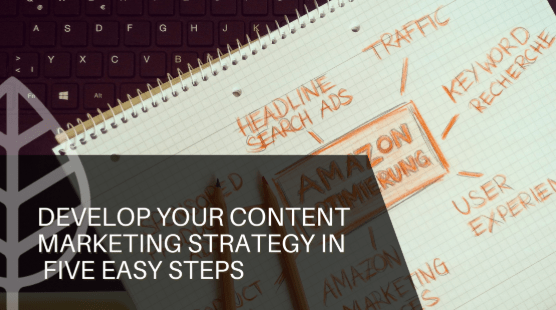
Develop Your Content Marketing Strategy in Five Easy Steps

The Ultimate Guide to Building a Successful Content Marketing Strategy

If you’re a small business offering specialized services, creating valuable content is one of the best ways to attract new customers and grow your brand. A strong content marketing strategy helps educate your audience, build credibility, and drive more traffic to your website. With so many content options available, it can be challenging to know where to start. This guide will help you create a content marketing strategy that supports your business goals.


Why Content Marketing Matters

Content marketing is more than just publishing blog posts, it helps build lasting relationships with your audience while strengthening your online presence. Here are a few reasons why it plays such an important role in business growth:


Build Trust with Your Audience

Sharing helpful, informative content shows customers that you’re knowledgeable and transparent. The more value you provide, the more confident potential customers will feel about choosing your business. Also, try to connect with your audience by using long tail keywords.


Stand Out from the Competition

Original, high-quality content helps differentiate your business from competitors. It not only attracts new customers but also encourages existing ones to return.


Improve Search Engine Rankings

When combined with a solid SEO strategy, optimized content can improve your visibility in search results, making it easier for potential customers to find your business online.


Increase Brand Awareness

Consistently publishing content across your website and social media helps keep your brand visible and top of mind for your target audience.


Help Customers Make Informed Decisions

Educational content gives potential customers a better understanding of your services, making them more confident in choosing your business.


How to Build Your Content Marketing Strategy

Developing a successful content marketing plan doesn’t have to be overwhelming. There are 5 ways AI content Marketing will get you sales. Start by answering a few key questions that will guide your strategy.


Define Your Goals

  • What message do you want your content to communicate?
  • What makes your business different from the competition?
  • What do you want customers to do after reading your content?


Know Your Target Audience

  • Who are your ideal customers?
  • What are their interests, challenges, and needs?
  • Where do they go to find information and recommendations?


Choose the Right Content

  • Which platforms will best reach your audience?
  • Would blogs, videos, email newsletters, social media, or downloadable resources work best?
  • What type of content can help your business stand out?


Plan Your Content in Advance

  • What services, promotions, or topics should you highlight?
  • Are there seasonal events or industry trends you can take advantage of?
  • Creating a content calendar helps keep your marketing organized and consistent.


Publish and Measure Results

  • When is your audience most active online?
  • Which pieces of content perform the best?
  • Is your content still accurate and relevant, or does it need updating?

Reviewing your performance regularly allows you to refine your strategy and continue improving your results over time. 


Why Choose The AD Leaf

Creating a content marketing strategy is only the first step; executing it consistently is where real results happen. At The AD Leaf® Marketing Firm, our experienced content marketing team can help you develop a strategy tailored to your business, whether you need updated service pages, ongoing blog content, or a complete content marketing campaign. Contact us today to learn how we can help your business create content that attracts customers and drives long-term growth.

AI Predictive Analytics for Smarter Marketing Decisions

AI Predictive Analytics for Smarter Marketing Decisions

Artificial intelligence is transforming the way businesses understand and connect with their audiences. Instead of reacting to customer actions after they happen, companies can now predict future behavior and deliver more personalized experiences. 

A well-planned AI Marketing Strategy helps organizations analyze customer data, identify buying patterns, and create campaigns that reach the right audience at the right time. By combining predictive analytics with digital marketing, businesses can improve customer satisfaction, strengthen brand loyalty, and increase conversions.

As online competition continues to grow, using AI is becoming essential for building smarter marketing campaigns and making informed business decisions.

Understanding an AI Marketing Strategy

An AI Marketing Strategy is the process of using artificial intelligence to improve marketing efforts through automation, predictive analytics, and data-driven decision-making. AI can quickly process large amounts of information from websites, customer relationship management (CRM) systems, email campaigns, and social media platforms to uncover valuable insights.

Rather than relying on assumptions, marketers can use AI to understand customer behavior and identify trends that help guide future campaigns. Businesses that begin with a strong content marketing strategy create a foundation for AI to deliver even better results by providing useful, relevant content that addresses customer needs.

Predictive Analytics Helps Businesses Stay Ahead

One of the biggest advantages of AI is its predictive analytics capabilities. This technology examines historical and real-time data to forecast future customer actions. Instead of waiting for customers to make decisions, businesses can anticipate what they are likely to need next.

Predictive analytics can help organizations:

  • Identify customers who are likely to make another purchase.
  • Detect visitors who may leave a website without converting.
  • Recommend products based on previous buying habits.
  • Recognize seasonal trends before demand increases.
  • Improve audience targeting for future campaigns.

These insights enable businesses to make proactive marketing decisions rather than react after opportunities have passed.

Improving SEO with Artificial Intelligence

Search engine optimization is no longer just about adding keywords to a webpage. Modern SEO focuses on providing valuable content that satisfies user intent, and AI can help marketers better understand what their audiences are searching for.

Artificial intelligence can identify content gaps, analyze competitors, discover trending topics, and recommend new keyword opportunities. It also helps marketers organize content into topic clusters that improve website structure and user experience.

An effective SEO content strategy supported by AI enables businesses to create content that answers customer questions while improving visibility in search engine results.

Creating Personalized Customer Experiences

Consumers are more likely to engage with brands that provide relevant and personalized experiences. AI makes personalization possible by analyzing customer behavior across multiple channels.

Some of the information AI evaluates includes:

  • Purchase history
  • Website browsing activity
  • Search behavior
  • Geographic location
  • Device preferences
  • Customer interests
  • Previous interactions with the business

Using these insights, companies can recommend products, personalize website content, customize email campaigns, and display targeted advertisements that are more likely to generate results.

Personalized marketing not only improves engagement but also strengthens trust between businesses and their customers.

Smarter Marketing Automation

Marketing automation has become increasingly powerful with the addition of artificial intelligence. Instead of following fixed schedules, AI-powered automation responds to customer actions in real time.

Businesses can automate processes such as:

  • Welcome email sequences
  • Product recommendations
  • Abandoned cart reminders
  • Follow-up messages after purchases
  • Customer re-engagement campaigns
  • Educational email series

These automated workflows save time while ensuring customers receive relevant information throughout their buying journey. Marketing teams can then spend more time developing creative strategies while AI manages repetitive tasks behind the scenes.

Bringing SEO and Social Media Together

Successful digital marketing involves more than optimizing a website. Customers interact with businesses through search engines, social media platforms, online reviews, and other digital channels.

Artificial intelligence helps marketers understand how users move between these channels and which interactions influence purchasing decisions. These insights allow businesses to create more consistent messaging across their entire marketing strategy.

Companies looking to strengthen their online presence can learn more about the ways social media and SEO strategy work together. Combining AI with SEO and social media creates a more connected customer experience while improving visibility across multiple platforms.

Best Practices for Building an AI Marketing Strategy

Businesses should approach AI with a clear plan rather than adopting new technology without defined goals. A successful AI Marketing Strategy starts with quality data and measurable objectives.

Some best practices include:

  • Define clear marketing goals.
  • Collect accurate customer data.
  • Regularly monitor campaign performance.
  • Test and optimize marketing content.
  • Continue updating SEO content.
  • Combine AI insights with human creativity.

Artificial intelligence is most effective when it supports experienced marketers instead of replacing them. Human expertise remains essential for understanding customer emotions, developing creative campaigns, and building lasting relationships.

Looking Ahead

Artificial intelligence will continue to shape the future of digital marketing as technology advances. Businesses that invest in an AI Marketing Strategy today will be better prepared to adapt to changing customer expectations, evolving search algorithms, and new marketing opportunities.

By using predictive analytics to understand customer behavior, improving SEO through valuable content, and creating personalized experiences across multiple channels, organizations can build stronger relationships while increasing long-term business growth. Companies that embrace AI now will be well positioned to remain competitive and deliver exceptional customer experiences for years to come.

Openai context hints

OpenAI Ads: Setting Up Context Hints for ChatGPT Ad Success

OpenAI Ads: Setting Up Context Hints for ChatGPT Ad Success

Are you a business owner grappling with underperforming marketing campaigns and struggling to connect with your target audience effectively? The rapidly evolving digital landscape demands innovative solutions, and understanding how to leverage new channels like ChatGPT for advertising can be a game-changer. This article will guide you through the intricacies of OpenAI Ads, focusing specifically on setting up context hints to drive unparalleled success in your ChatGPT advertising efforts. By mastering this new frontier, you can unlock significant growth and achieve your marketing objectives with greater precision.

Key Takeaways:

  • Context hints are crucial for guiding the AI in ChatGPT ads, ensuring your message aligns perfectly with the user’s conversational context and intent.
  • Effective implementation of context hints within the OpenAI Ads Manager allows advertisers to target audiences with unprecedented precision, leading to higher engagement and conversion rates.
  • Utilizing context hints can significantly improve the performance of your ChatGPT ad campaigns by reducing irrelevant impressions and increasing the likelihood of meaningful user interactions.
  • Partnering with an expert like The AD Leaf Marketing Firm can help businesses navigate the complexities of OpenAI Ads and implement sophisticated context hint strategies for optimal results and scalable growth.

What are Context Hints in ChatGPT Ads?

Context hints are a pivotal element within the OpenAI Ads system, designed to provide the AI with crucial information about an advertiser’s product or service. These hints help guide the conversational AI to surface relevant advertisements during user interactions within ChatGPT. Essentially, they function as explicit directives, ensuring that:

  • The ad copy aligns seamlessly with the ongoing chat.
  • Targeting aligns seamlessly with the ongoing chat.

Thereby enhancing the user experience and the efficacy of the ad.

Understanding Context Hints and Their Importance

Understanding context hints is fundamental for any marketer looking to advertise on ChatGPT. These hints allow the AI to grasp the nuanced conversational context of a user’s chat, enabling it to present the most appropriate and timely ad. Their importance cannot be overstated, as they directly impact the relevance of the ad impression, influencing click-through rates and overall conversion. Without well-crafted context hints, advertisers risk showing irrelevant ads, leading to wasted spend and a diminished user experience inside ChatGPT.

How Context Hints Work in OpenAI Ads

Context hints work by providing the OpenAI Ads system with descriptive phrases and keywords that characterize your product or service and the types of conversations where your ad should appear. When a user engages in a chat that aligns with these provided hints, the AI is more likely to trigger your ad. This mechanism moves beyond traditional keyword matching, leveraging the AI’s understanding of natural language to identify relevant opportunities for your ChatGPT ad to be shown, making the ads system highly intelligent.

Benefits of Utilizing Context Hints

The benefits of utilizing context hints for ChatGPT ad success are manifold. They significantly enhance ad relevance, leading to higher engagement and better performance metrics. By precisely guiding the AI, context hints minimize irrelevant impressions, ensuring your ad spend is directed towards users genuinely interested in your offering. This targeted approach offers several key advantages:

  • Higher engagement and better performance metrics like average CPC and average CPM.
  • Minimized irrelevant impressions, ensuring ad spend is directed towards genuinely interested users.
  • Boosted conversions.
  • Improved brand safety and overall brand perception within this new digital advertising channel.

How to Set Up Context Hints for Success in OpenAI Ads Manager

Setting up context hints effectively in the OpenAI Ads Manager is a strategic process that demands attention to detail. This involves navigating the Ads Manager Beta, creating specific ad groups, and meticulously crafting your context hints to describe the conversations where your ad should appear. A well-structured setup ensures that your ChatGPT advertising campaigns leverage the full potential of AI-driven targeting, maximizing your return on investment and achieving your marketing goals.

Step-by-Step Guide to Accessing Ads Manager Beta

To begin setting up context hints, you first need to access the OpenAI Ads Manager Beta. As this is a new channel, access may be granted through an invitation or specific registration process. Once you have access, familiarize yourself with the interface, as this is where you will manage all your OpenAI Ads campaigns. The platform is designed to be intuitive, guiding advertisers through the process of creating and optimizing their ad groups for ChatGPT advertising.

Creating Effective Ad Groups with Context Hints

Creating effective ad groups is paramount, and context hints are assigned at the ad group level. Within each ad group, you will specify the product or service you are promoting and then write context hints that precisely describe the conversations your target audience might have. Think about user intent and the types of queries that would lead to a natural integration of your ad inside ChatGPT. This granular approach allows for highly targeted campaigns.

Best Practices for Implementing Context Hints

When implementing context hints, several best practices can significantly boost your ChatGPT ad performance. These include:

  • Focusing on specificity and providing detailed, yet concise, descriptions.
  • Utilizing a mix of broad and exact-match keywords within your hints to capture a wider range of relevant conversational contexts.
  • Regularly reviewing your ad group analytics and adjusting your context hints based on performance data to continuously optimize your campaigns for better conversion and lower average CPC.

How to Optimize Your ChatGPT Ads with Keywords

Optimizing your ChatGPT ads with keywords is a critical step in ensuring your campaigns reach the right audience at the right time. While context hints provide a broader understanding of the conversational context, specific keywords within your ad copy and landing page help the AI further refine targeting and improve relevance. This dual approach maximizes the chances of your ad appearing in highly pertinent conversations, driving better engagement and conversion rates for your product or service.

Selecting the Right Keywords for Your Ads

Selecting the right keywords for your ChatGPT ads involves a comprehensive understanding of your target audience’s search intent and conversational patterns. Research relevant terms that people might use when discussing topics related to your product or service within a chat. Consider both broad and exact-match keywords to capture a wide range of relevant impressions. The goal is to identify keywords that not only describe your offering but also align with the natural language used in conversations inside ChatGPT.

Incorporating Keywords into Context Hints

Incorporating keywords directly into your context hints strengthens their effectiveness in guiding the AI. While context hints describe the conversations, integrating specific keywords ensures that the AI understands precisely what your ad is about. For example, if you’re advertising a “digital marketing course,” your context hints might include phrases like “learning digital marketing,” “online marketing education,” or “improving SEO skills,” all containing relevant keywords. This granular approach helps the OpenAI Ads system deliver more accurate and relevant ads.

Measuring the Success of Your Keyword Strategy

Measuring the success of your keyword strategy is essential for continuous optimization. Monitor key performance indicators (KPIs) such as average CPC, average CPM, click-through rates, and conversion rates within the OpenAI Ads Manager. Analyze which keywords are driving the most relevant traffic from ChatGPT ads and contributing to conversions. Use these insights to refine your keyword lists, remove underperforming terms, and allocate budget more effectively to achieve your advertising goals.

What to Consider for Brand Safety in ChatGPT Advertising?

Brand safety in ChatGPT advertising is a paramount concern for any advertiser looking to protect their brand’s reputation and ensure their ads appear in appropriate conversational contexts. Given the AI-driven nature of ChatGPT, understanding and implementing robust safety measures is crucial to prevent your ads from being associated with undesirable or irrelevant content. Proactive strategies are necessary to maintain a positive brand image and ensure your ad campaigns align with your brand values inside ChatGPT.

Understanding Brand Safety in the Context of OpenAI Ads

Understanding brand safety in the context of OpenAI Ads means recognizing the unique challenges and opportunities presented by AI-powered conversational platforms. Unlike traditional display ads or search ads, where content placement can be more rigidly controlled, ads in ChatGPT are dynamically generated based on the conversational context. This requires a nuanced approach to ensure your product or service is not associated with sensitive, inappropriate, or off-topic discussions, which could harm your brand’s reputation and dilute your message.

Implementing Safety Measures in Your Advertising Strategy

Implementing effective safety measures in your advertising strategy for ChatGPT ads involves careful keyword exclusion lists and finely tuned context hints. Work closely with the OpenAI Ads Manager to define what constitutes an “unsafe” conversation for your brand. Utilize negative keywords to prevent your ads from appearing in chats discussing specific topics. Additionally, ensure your context hints are precise enough to guide the AI towards brand-safe conversations, aligning with your desired brand image and avoiding unintended impressions.

Monitoring Brand Safety: Tools and Techniques

Monitoring brand safety in your ChatGPT advertising campaigns requires a combination of vigilance and the right tools. Regularly review ad placements and performance data within the OpenAI Ads Manager to identify any instances where your ads appeared in undesirable conversational contexts. While specific tools for OpenAI Ads are still evolving, leveraging existing analytics tools and potentially third-party brand safety platforms can help track and flag problematic impressions. This continuous monitoring allows for prompt adjustments to your ad groups and context hints, safeguarding your brand’s integrity.

How to Set Up Tracking for Your OpenAI Ads

Setting up robust tracking for your OpenAI Ads is fundamental to understanding the performance of your ChatGPT advertising campaigns and making data-driven decisions. Without proper tracking, it’s impossible to accurately measure return on investment, optimize your ad spend, or understand how users interact with your ads after an impression or click. Effective tracking provides the insights necessary to refine your strategies, improve conversion rates, and ultimately achieve greater success with your product or service promotion.

Why Tracking is Essential for Ad Success

Tracking is essential for ad success because it provides tangible data on how your ChatGPT ads are performing. It allows marketers to see which context hints are most effective, which ad copy resonates best, and critically, how many users are converting on your landing page. Understanding traffic from ChatGPT ads, from the initial impression to the final conversion, helps you identify successful strategies and areas for improvement, ensuring your budget is spent efficiently on this new channel.

Setting Up Tracking Mechanisms in Ads Manager

Setting up tracking mechanisms in the OpenAI Ads Manager typically involves implementing conversion measurement and utilizing UTM parameters. For conversion tracking, you’ll need to configure events that signify valuable actions on your landing page, such as a purchase or lead form submission. Additionally, attach UTM parameters to your landing page URLs for each ad group. These parameters allow you to track the source of traffic more accurately within your existing analytics tools, distinguishing traffic from ChatGPT ads from other digital advertising channels.

Interpreting Tracking Data for Better Performance

Interpreting tracking data effectively is key to improving your ChatGPT ad performance. Analyze metrics like average CPC, CPM, click-through rate, and conversion rate for each ad group and context hint. Look for patterns: which types of conversations lead to the highest conversions? Are there specific ad copies that drive more clicks? Use this data to refine your context hints, adjust your ad copy, and optimize your budget allocation. This iterative process of analysis and adjustment will continuously enhance the effectiveness of your ads in ChatGPT.

Key Takeaways

Summary of Effective Context Hint Strategies

Effective context hints are the cornerstone of successful ChatGPT advertising, acting as critical signals that guide the AI in presenting your product or service to the most relevant users. By meticulously crafting these hints within the OpenAI Ads Manager, advertisers can ensure their ads in ChatGPT align perfectly with the user’s conversational context, significantly boosting engagement and conversion rates. It’s about leveraging AI’s understanding of natural language to create a seamless and pertinent ad experience.

Importance of Keywords in ChatGPT Ads

Keywords play a pivotal role in refining the precision of your ChatGPT ad campaigns. While context hints define the broader conversational landscape, strategic keyword integration within your ad copy and context hints themselves further hones targeting. This synergy ensures that your ad reaches users with explicit intent, improving metrics like average CPC and driving higher quality traffic from ChatGPT ads to your landing page, ultimately leading to better conversions.

Brand Safety Best Practices

Brand safety is non-negotiable in the dynamic environment of ChatGPT advertising. Implementing best practices involves careful selection of negative keywords and precise context hints to prevent your ads from appearing in inappropriate or sensitive conversational contexts. Proactive monitoring within the OpenAI Ads Manager, coupled with a vigilant approach to ad group performance, helps safeguard your brand’s reputation and ensures your ads consistently reflect your desired brand image inside ChatGPT.

Tracking for Continuous Improvement

Robust tracking mechanisms are essential for the ongoing optimization of your OpenAI Ads. By utilizing conversion measurement and UTM parameters, marketers can gain invaluable insights into the performance of their ChatGPT ads, from initial impression to final conversion. Analyzing data such as average CPM, click-through rates, and conversions allows for continuous refinement of ad groups, context hints, and ad copy, driving sustained improvement and maximizing ROI on this new channel of digital advertising.

Frequently Asked Questions | The AD Leaf Marketing Firm

How do I start advertising on ChatGPT?

To start advertising on ChatGPT, you typically begin by gaining access to the OpenAI Ads Manager Beta. Once access is secured, you’ll create ad groups, define your target audience, and most importantly, set up precise context hints that describe the conversations where your product or service should appear. This process guides the AI, ensuring your ChatGPT ad campaigns are relevant and effective, ultimately driving valuable traffic to your landing page.

What are the benefits of using OpenAI Ads Manager Beta?

The OpenAI Ads Manager Beta offers numerous benefits for advertisers, primarily its ability to leverage advanced AI for highly contextual and relevant ad placement within ChatGPT. It allows for granular control over ad groups and context hints, leading to improved ad performance, higher click-through rates, and better conversion potential. This new channel provides a unique opportunity to engage users directly within their conversational context, making your advertising efforts more impactful.

Can I use context hints for different ad formats?

Yes, context hints are a foundational element designed to guide the AI across various potential ad formats that may be introduced within ChatGPT. Regardless of the specific ad format, the core principle remains the same: providing the AI with clear information to describe the conversations where your ad is most relevant. This ensures consistent brand safety and ad effectiveness, no matter how the ad is presented inside ChatGPT to the user.

What should I do if my ads are not performing well?

If your ads are not performing well, the first step is to review your context hints and ad copy within the OpenAI Ads Manager. Analyze your analytics to identify underperforming ad groups or hints. Consider refining your keywords, adjusting your target audience settings, or enhancing your landing page experience. Continuously testing and iterating based on data, focusing on average CPC and conversion rates, is crucial for optimizing your ChatGPT advertising efforts.

How do I ensure my ads are compliant with brand safety guidelines?

Ensuring brand safety for your ChatGPT ads involves implementing negative keywords and carefully crafting your context hints to avoid inappropriate conversational contexts. Regularly monitor your ad placements and performance data in the OpenAI Ads Manager to proactively identify and address any issues. Adhering to the platform’s guidelines and continuously refining your targeting helps prevent your product or service from being associated with undesirable content, maintaining your brand’s integrity.

What support does The AD Leaf Marketing Firm provide for OpenAI Ads?

The AD Leaf Marketing Firm specializes in assisting businesses with navigating and optimizing complex digital advertising platforms, including OpenAI Ads. We provide expert guidance on setting up effective context hints, crafting compelling ad copy, selecting precise keywords, and implementing robust tracking mechanisms. Our team ensures your ChatGPT ad campaigns maximize ROI, achieve superior conversion rates, and maintain brand safety, positioning your product or service for unparalleled success in this innovative new channel.

Best AI Agents Development Companies for Customer Service, ai customer service agent development agency

Best AI Agents Development Companies for Customer Service

Best AI Agents Development Companies for Customer Service

Are you a business owner grappling with escalating customer service demands, a stretched support team, and the persistent challenge of maintaining high customer satisfaction? In today’s fast-paced digital landscape, traditional customer support models often struggle to keep up, leading to missed opportunities and a potentially declining customer experience. This article delves into how AI agents can revolutionize your customer service operations, offering scalable and efficient solutions that free up your human agents to focus on more complex tasks and ultimately drive better business outcomes. Discover how working with the right AI agent development comapny for customer service can transform your customer interactions and position your company for success in an increasingly AI-driven market.

Key Takeaways

  1. Prioritize clear business goals and measurable outcomes.Top AI customer service agent development companies focus first on defining use cases, KPIs (CSAT, FRT, containment rate, cost per contact) and data requirements. Before shortlisting vendors, map the customer journeys you want to automate, estimate expected savings and experience improvements, and ensure the provider can align technical choices (NLP models, orchestration, analytics) to those outcomes.
  2. Evaluate technical capabilities and integration readiness.Best vendors combine advanced conversational AI (robust intent recognition, entity extraction, contextual memory) with flexible integration layers for CRMs, ticketing systems, telephony and analytics. Vet vendors on model customization, multilingual support, data privacy practices, latency and uptime SLAs, ability to deploy on-prem/cloud/hybrid, and whether they provide ongoing model retraining and monitoring tooling.
  3. Look for strong human+AI orchestration and governance.Leading companies design hybrid workflows that let AI handle routine queries while routing complex or sensitive issues to human agents seamlessly. Assess fallback strategies, escalation rules, explainability features, audit logs, and compliance controls. Also confirm vendor training programs, change management support, and phased rollout plans to minimize disruption and sustain adoption.
  4. Compare value beyond technology — support, ROI transparency and partnership fit matter.Choose vendors that provide clear implementation roadmaps, measurable pilot programs, transparent pricing, and post-launch optimization services. References, case studies in your industry, and a collaborative approach to continuous improvement are often the difference between pilots that stall and deployments that scale.

For help with vendor selection, messaging, and go-to-market support around AI customer service agents, consider The AD Leaf as a marketing partner. They can assist with vendor shortlists, positioning, content and campaign execution to accelerate adoption and maximize return on your AI customer service investments.

What is an AI Agent for Customer Service?

Definition and Functionality

An AI agent for customer service is a sophisticated software application designed to interact with customers, understand their queries, and provide relevant solutions, often mimicking human conversation. Utilizing advanced conversational AI, these agents can process natural language, interpret intent, and access vast knowledge bases to address a wide range of customer requests. They function as a crucial first line of defense in customer support, capable of handling routine inquiries, guiding customers through processes, and even resolving common issues without the need for a human agent. The core functionality of an AI agent is to automate customer interactions, ensuring consistent and immediate responses around the clock.

How AI Agents Enhance Customer Support

AI agents significantly enhance customer support by providing instant, 24/7 assistance, which dramatically improves the customer experience. By automating responses to frequently asked questions and handling repetitive tasks, an AI agent allows human agents to focus on more complex, high-value customer interactions that require empathy and nuanced problem-solving. This shift not only boosts the efficiency of the support team but also elevates overall customer satisfaction by reducing wait times and offering immediate resolutions. The implementation of a robust AI agent platform leads to a more streamlined and effective support operation, directly contributing to positive customer relationships.

Key Features of Effective AI Agents

Effective AI agents possess several key features that enable them to deliver superior customer service. They must also have seamless integration with existing customer service platforms, such as Zendesk, to access customer history and relevant information. Furthermore, the best AI agents for customer service offer continuous learning, meaning they improve over time with more data and interactions. Enterprise-grade AI agents also provide scalability, allowing businesses to handle a growing volume of customer requests without a proportional increase in human resources, ensuring consistent and high-quality support at all times.

Feature Description
Robust Conversational AI Allows for natural and intuitive interactions that mirror human conversation.
Continuous Learning Improves over time with more data and interactions.

Top AI Agent Development Companies for AI Customer Service Agents

Overview of Leading Providers

When seeking to implement the best AI agents for customer service, businesses often look to leading development companies that offer robust conversational AI platforms. These top-tier providers specialize in creating sophisticated AI agent solutions capable of transforming customer interactions and enhancing the overall customer experience. They deploy AI agents designed to automate customer requests, providing immediate and accurate responses, thereby significantly boosting customer satisfaction. Understanding the landscape of these leading providers is crucial for any business aiming to leverage enterprise AI for superior customer support.

The AD Leaf Marketing Firm

The AD Leaf Marketing Firm is a premier partner for developing and deploying AI agents at scale, offering tailored solutions that integrate seamlessly with your existing customer service platform. Our expertise in conversational AI ensures a highly natural and effective customer experience. We focus on creating enterprise-grade AI agents that empower your human agent team by automating routine tasks, allowing them to focus on complex customer support issues and ultimately drive higher customer satisfaction. Partner with us to revolutionize your customer service operations.

Feature Benefit
Tailored AI agent solutions Seamless integration with existing customer service platforms
Conversational AI expertise Highly natural and effective customer experience
Enterprise-grade AI agents Automates routine tasks, empowering human agents to focus on complex issues and driving higher customer satisfaction

Zendesk AI: A Case Study

Zendesk AI offers a compelling case study in how a powerful AI agent platform can transform customer support. By integrating advanced AI tools directly into their widely used customer service platform, Zendesk AI agents enhance the capabilities of support teams, enabling them to automate customer interactions with remarkable efficiency. This allows the human agent to focus on more complex tasks, while the AI agent handles routine inquiries, improving response times and overall customer satisfaction. The seamless functionality of Zendesk AI demonstrates the benefits of a well-integrated AI customer service solution.

Fin.ai

Fin.ai is another prominent player in the AI agent development space, specializing in creating intelligent AI agent solutions for the financial sector. Their AI agents are meticulously designed to handle intricate customer requests with precision and security, ensuring a superior customer experience. By leveraging sophisticated conversational AI, Fin.ai helps businesses deploy AI agents that can automate customer interactions while maintaining regulatory compliance. This focus on specialized, enterprise-grade AI ensures that their AI customer service solutions deliver exceptional value and efficiency for financial institutions looking to enhance their customer support.

Agentic AI: Innovations in Customer Service

Agentic AI represents a cutting-edge approach to customer service, focusing on autonomous AI agents that can proactively resolve issues and anticipate customer needs. These innovative AI agent solutions go beyond reactive responses, using advanced AI capabilities to learn from customer interactions and provide highly personalized support. By implementing agentic AI, businesses can elevate their customer experience, reduce the workload on their human agent support team, and achieve unprecedented levels of customer satisfaction. This forward-thinking approach is set to redefine the future of customer support.

How to Choose the Best AI Agent Company for Customer Support | The AD Leaf Marketing Firm

Evaluating AI Agent Platforms

When selecting an AI agent platform for customer support, it is critical to thoroughly evaluate its capabilities and alignment with your business needs. Focus on platforms that offer robust conversational AI, ensuring natural and effective customer interactions. Assess how easily the AI agent can integrate with your existing customer service platform, such as Zendesk, to provide a seamless customer experience. A comprehensive evaluation should also consider the platform’s ability to automate customer requests, providing immediate and accurate responses, which significantly enhances the overall support operation and customer satisfaction.

Comparing Customer Service AI Solutions

Comparing various customer service AI solutions involves a deep dive into their feature sets, scalability, and performance metrics. Look for solutions that specialize in enterprise-grade AI, designed to handle large volumes of customer interactions efficiently. Consider platforms that offer advanced AI tools, including sophisticated natural language processing and machine learning capabilities, to ensure the AI agent can effectively understand and resolve complex queries. The goal is to find an AI customer service agent that not only automates responses but also learns and improves over time, continually enhancing the customer experience.

Factors to Consider in Development Companies

Choosing the right development company for your AI agent solution is paramount for long-term success. Key factors include their expertise in conversational AI and their track record of deploying AI agents at scale for various businesses. Ensure the company understands your specific customer support challenges and can tailor an AI agent for customer service that integrates seamlessly with your existing infrastructure.

Key Consideration Example/Benefit
Integration with existing infrastructure Platforms like Zendesk
Specialized AI solutions The AD Leaf Marketing Firm crafts bespoke AI solutions that deliver measurable results, improving customer interactions and satisfaction.

Benefits of Using AI in Customer Service

Cost Efficiency and Scalability

One of the primary benefits of using AI in customer service is the significant cost efficiency and scalability it offers. By deploying AI agents, businesses can automate customer interactions, reducing the need for an ever-expanding human agent team for routine inquiries. This automation allows companies to handle a much higher volume of customer requests without a proportional increase in operational costs. Furthermore, an AI agent platform can easily scale AI agents up or down based on demand, ensuring consistent support operation during peak times and fostering greater customer satisfaction.

Improved Response Times and Customer Satisfaction

AI agents dramatically improve response times, which is a critical factor in enhancing customer satisfaction. With an AI customer service agent available 24/7, customers receive immediate answers to their queries, eliminating frustrating wait times. This instant gratification significantly boosts the customer experience, making interactions more efficient and positive. The ability of the AI agent for customer support to quickly resolve common issues also frees up human agents to focus on more complex cases, leading to a more streamlined and effective support team and overall improved customer satisfaction.

Data Insights and Personalization

Utilizing AI in customer service provides invaluable data insights and opportunities for personalization that were previously unattainable. An AI agent can analyze vast amounts of customer interactions, identifying trends, pain points, and preferences. This data allows businesses to better understand their customer base and proactively address issues. Furthermore, enterprise AI enables personalized customer interactions, tailoring responses and recommendations based on individual customer history and behavior, leading to a more relevant and engaging customer experience and fostering deeper customer satisfaction.

Customer Service: The Role of AI Agents

Predicted Trends and Innovations

The role of AI agents in customer service is continuously evolving, with predicted trends pointing towards even more sophisticated conversational AI and personalized customer interactions. We anticipate further advancements in natural language understanding, allowing AI agents to comprehend nuanced human emotions and context more effectively. The integration of generative AI will enable AI agents to create more dynamic and tailored responses, further enhancing the customer experience. These innovations will allow businesses to deploy AI agents that are more intuitive, efficient, and capable of addressing a broader range of customer requests, setting new benchmarks for customer satisfaction.

Preparing Your Business for the Future

To prepare your business for the future of customer service, embracing AI agent technology is not just an option, but a necessity. Begin by evaluating your current customer support operation and identifying areas where an AI agent for customer service can automate routine customer requests. Invest in scalable AI agent platforms that can grow with your business and seamlessly integrate with existing systems like Zendesk. Training your human agent support team to collaborate effectively with AI agents will be crucial, ensuring a hybrid approach that maximizes efficiency and improves customer satisfaction. The AD Leaf Marketing Firm can guide you through this transformative journey.

How to Stay Competitive with AI Tools

Staying competitive in today’s market demands a strategic adoption of AI tools, particularly within customer service operations. Businesses must leverage conversational AI to automate customer interactions, reduce response times, and provide 24/7 support. Implementing a robust AI agent for customer service not only frees up your human agent support team to focus on complex issues but also gathers invaluable data insights to personalize the customer experience. By continuously updating your AI capabilities and partnering with experts like The AD Leaf Marketing Firm, you can deploy AI agents that keep your business at the forefront of customer satisfaction.

Frequently Asked Questions (FAQs) About AI Agents for Customer Service | The AD Leaf Marketing Firm

What are the Best Customer Service AI Platforms?

Identifying the best customer service AI platforms depends heavily on a business’s specific needs, but leading solutions often excel in conversational AI and seamless integration. Platforms like Zendesk AI offer comprehensive features that allow businesses to automate customer interactions effectively, providing an exceptional customer experience. The best AI agent platforms are those that provide robust AI tools for an AI agent for customer service to handle a wide range of customer requests, thereby enhancing the overall support operation and boosting customer satisfaction. Enterprise-grade AI capabilities are also crucial for managing large volumes of inquiries.

How Do AI Agents Improve Customer Experience?

AI agents significantly improve customer experience by offering immediate, 24/7 support, which drastically reduces wait times and provides instant resolutions to customer requests. An AI agent for customer service can personalize interactions by accessing customer history and preferences, making each engagement more relevant and efficient. This not only leads to higher customer satisfaction but also frees up human agent support teams to focus on complex issues, ultimately creating a more streamlined and responsive customer service operation. The consistent and accurate responses from an AI agent ensure a reliable and positive customer journey.

What Should Businesses Look for in AI Tools?

When businesses look for AI tools for customer service, several critical features should be prioritized to ensure optimal performance. Key considerations include the strength of the conversational AI for natural customer interactions, the ability to seamlessly integrate with existing customer service platforms like Zendesk, and robust AI capabilities that allow the AI agent to learn and adapt. Furthermore, businesses should seek AI agent platforms that offer scalability, enterprise-grade AI for handling high volumes, and comprehensive analytics to gain insights into customer interactions, all contributing to improved customer satisfaction and an efficient support team.

Can AI Agents Fully Replace Human Customer Service?

While AI agents are incredibly powerful and can automate customer interactions for a significant portion of customer requests, they cannot fully replace human customer service. AI agents excel at handling routine inquiries, providing quick answers, and offering 24/7 support, greatly enhancing the customer experience. However, complex, emotionally charged, or highly nuanced issues still require the empathy, critical thinking, and problem-solving skills of a human agent. The most effective approach is a hybrid model where an AI agent works in conjunction with a human agent support team, ensuring comprehensive coverage and optimal customer satisfaction.

How are AI Agents Integrated into Existing Systems?

Integrating AI agents into existing systems is a crucial step for businesses looking to enhance their customer support operations. Typically, an AI agent for customer service is integrated through APIs and pre-built connectors that link it to various customer service platforms, CRM systems, and knowledge bases. For instance, an AI agent can be seamlessly connected with Zendesk to access customer data and communication history, enabling a more personalized customer experience. This allows the AI agent platform to automate customer requests while ensuring a smooth handover to a human agent when necessary, optimizing the support operation and boosting customer satisfaction.

What is the Future of Customer Support in 2026?

The future of customer support in 2026 is poised for significant transformation, with AI agents playing an even more central role. We anticipate advanced conversational AI that provides highly intuitive and personalized customer interactions, far beyond current capabilities. The integration of generative AI will enable AI agents to offer proactive and predictive support, anticipating customer needs before they arise. This evolution will lead to a hybrid support model where AI agents and human agents collaborate seamlessly, ensuring unparalleled customer satisfaction and efficiency in every customer service operation. The AD Leaf Marketing Firm is at the forefront of these innovations.

Voice Search And AI Optimization For Local Business

Think about how many times a day you find yourself reaching for your phone to look up something. Whether it be directions, restaurant recommendations, or fact-checking something you saw on Instagram, you probably use your phone for search more than you realize. As of 2026, over half of all internet traffic comes from mobile devices, according to Consumer Affairs. 

This is great news for businesses because they can connect with consumers wherever they go and whatever they are doing. No longer do you need a place with wifi to sit down with your computer if you want to look something up online. Features like data and voice search make it easy for users to search while on the go. 

Half of mobile users in the U.S. use voice search daily, and much of this traffic comes from AI assistants like Siri. 

Optimizing for voice search is becoming increasingly important for getting your business in front of users, especially as search becomes increasingly reliant on AI.


Voice Search SEO Can Connect Local Businesses With High-Intent Consumers

Imagine two users searching for restaurants in their area: one is searching on their laptop at home, and the other is using voice search while driving around town. Which one do you think is likely to commit to going to a restaurant first? Probably the one on the road.

Users often use voice search when they want an immediate, highly relevant answer. These users are high-intent and ready to convert, making them an incredibly valuable group to target.

The same factors that make these users ready to convert are also why a strong voice search SEO strategy is so important. Busy, multitasking users are likely to choose the first relevant answer they receive from their AI assistant. If you are not among the first few suggestions, you are not being considered.

But if you can get in those first few suggestions, you can unlock an audience of consumers ready to convert. 


Voice Search is Changing eCommerce

Voice search is impacting more than businesses with physical stores or local service providers; it is also changing how consumers shop online. 

In 2024, 22% of consumers were using voice search to make direct purchases through their AI assistants. That number has likely increased as AI has increasingly embedded itself in the consumer decision-making process. 

Consumers are using AI assistants to guide their purchasing decisions, largely interacting with them via voice search. Appearing in these search results will become increasingly critical for e-commerce businesses to connect with and attract consumers.


How to Optimize for Voice Search and AI Assistants

In many ways, the old rules of SEO still apply, especially as AI often scrapes top search results for information. Authority, relevance, and trustworthiness are important for appearing in both traditional search results and voice search results. 

For example, if someone does a voice search for a particular service and your business has an average rating of 3 stars out of 5, there is a good chance it will not appear on the first page. 

The main difference between traditional search and voice search lies in how users phrase their queries. Voice search queries tend to be more conversational and more clearly phrased as questions. This aligns with the trend we are seeing in AI searches, where queries are longer, more specific, and more natural-sounding than traditional searches. 

Adapting your SEO strategy for these longer, more conversational queries is critical for keeping up with changing search behavior. 

Working with a marketing company like the Ad Leaf that specializes in AI-friendly SEO strategies can help bring your website out of 2015 and into this new era of AI search. 


It Can Help With A Local Business Website Structure & Content Marketing

When a business has a website and is looking to build a content marketing strategy for voice search SEO, it should imagine being in the customer’s position. What questions might they ask?

When marketing, it is important to consider the consumer journey. At which point in the journey does the consumer see your marketing, and how can we move them further along that journey?

You want your content to guide the consumer toward a purchase decision. If they are using voice search SEO, you need to be the business that can answer all their questions and objections about why they need your products and services.

High-quality, relevant content optimized for voice search can help you, as a local business, be found on the first page of Google.


Appear in Voice Searches With The AD Leaf

The AD Leaf’s SEO and Content Marketing teams stay on top of evolving SEO trends and user search behavior, so that even in a shifting search landscape, your website reaches consumers.


Start ranking in voice searches with The AD Leaf

ChatGPT Ads vs. Google Search Ads

ChatGPT Ads vs. Google Search Ads: Key Differences and Which Is Right For Your Business

In the rapidly evolving landscape of digital advertising, businesses often find themselves at a crossroads when deciding on the most effective platforms to reach their target audience and drive conversions. If you’re a business owner grappling with underperforming marketing efforts or struggling to achieve scalable growth, understanding the nuanced differences between emerging AI-driven solutions and established giants is crucial. This article will provide a comprehensive comparison between ChatGPT Ads and Google Search Ads, helping you determine which platform, or combination thereof, is the right strategic fit for your unique business objectives. The AD Leaf Marketing Firm is ready to partner with you to implement the ideal strategy.

What Are ChatGPT Ads and Google Search Ads?

Understanding ChatGPT Ads

ChatGPT Ads represent a new frontier in AI-driven advertising, where ad formats are deeply integrated within conversational AI interfaces. While specific implementation details are still emerging from OpenAI, the core concept involves advertisers leveraging the conversational nature of ChatGPT to present highly relevant product or service information in response to user queries. This platform offers a unique opportunity for businesses to engage with users during their research and discovery phases, potentially leading to more informed and higher-intent conversions as users interact directly with AI responses. The ability to tailor responses based on the ongoing conversation provides a dynamic and personalized ad experience that traditional search ads cannot replicate.

Overview of Google Search Ads

Google Search Ads, a cornerstone of paid search for decades, allows businesses to display text ads directly within Google’s search results in response to specific user queries. Advertisers bid on keywords relevant to their offerings, and when a user searches for those terms, their ad may appear at the top or bottom of the search engine results page. This platform excels at capturing high-intent users who are actively searching for solutions, products, or services, making it a powerful tool for driving immediate traffic to a landing page. Google Ads campaigns are built around robust keyword research, bidding strategies, and conversion tracking to ensure optimal performance and a strong return on investment.

Key Features of Each Platform

When comparing ChatGPT Ads with Google Ads, each platform offers distinct features. Google Ads is known for its extensive reach, detailed keyword targeting, and a mature ecosystem of tools for optimization, conversion tracking, and analytics. It primarily serves text ads, though it integrates with other Google advertising products.

Here’s a breakdown of their key characteristics:

Platform Key Features
Google Ads Extensive reach, detailed keyword targeting, mature ecosystem of tools for optimization, conversion tracking, and analytics. Primarily serves text ads.
ChatGPT Ads Conversational format, dynamic and interactive user engagement, ads integrated within AI responses for a more native and less intrusive experience.

How Do ChatGPT Ads Actually Differ from Google Search Ads?

Ad Formats Comparison

The primary distinction in ad formats when comparing ChatGPT Ads vs. Google Ads lies in their presentation. The table below outlines key differences:

Ad Platform Ad Format Characteristics
Google Search Ads Predominantly text ads; concise, static snippets appearing above or below organic search results. Designed for quick scanning and direct clicks.
ChatGPT Ads (Envisioned) More conversational and integrated; potentially appearing as part of the AI’s response or woven into the chat flow. Allows for a richer, more interactive and dynamic experience based on ongoing conversation.

Targeting and Audience Reach

Targeting and audience reach also show significant differences between ChatGPT Ads and Google Search Ads. This allows for incredibly precise targeting of high-intent users actively searching for specific solutions. While ChatGPT Ads might represent a different type of intent (more focused on research and discovery rather than immediate purchase), it offers a unique opportunity to reach users engaging with AI for information, potentially before they even initiate a traditional Google Search, broadening the scope of an advertiser’s reach.

Ad Platform Targeting Criteria
Google Search Ads Keyword queries, geographic location, demographics, past browsing behavior
ChatGPT Ads Context of conversational queries within the ChatGPT platform

Cost Structures of ChatGPT Ads vs. Google Ads

The cost structures of ChatGPT Ads vs. Google Ads are also likely to diverge. Google Ads operates on a bid-based system, predominantly cost-per-click (CPC), where advertisers pay each time a user clicks on their ad. Factors like keyword competition, ad quality, and bidding strategy heavily influence the Google Ads cost. While specifics for ChatGPT Ads are speculative, they might involve a different model, perhaps based on engagement metrics, conversational interactions, or a unique AI-driven pricing model. As an advertiser, understanding these potential differences in CPCs and overall campaign costs will be crucial for budget allocation and measuring the ROI of both platforms when considering adding ChatGPT Ads to your marketing mix or when you test ChatGPT Ads.

When Should You Use ChatGPT Ads?

Best Use Cases for ChatGPT Advertising

ChatGPT Advertising is particularly well-suited for businesses focused on early-stage customer engagement, research and discovery, and complex product or service explanations. This platform excels when users are asking ChatGPT to help them understand options or compare solutions, as the conversational format allows for detailed AI responses. Companies offering intricate services, high-value products requiring extensive consideration, or those in emerging markets where user education is key, can significantly benefit. Utilizing ChatGPT Ads helps in nurturing high-intent leads by providing comprehensive answers within the chat itself, making it an ideal choice for a nuanced approach to an AI ad strategy.

Advantages of Using ChatGPT Ads

The primary advantages of using ChatGPT Ads lie in their interactive and personalized nature, offering a unique opportunity for advertisers to engage deeply with potential customers. Unlike traditional text ads, ChatGPT Ads can adapt to user queries in real-time, providing tailored information that directly addresses their needs. This conversational approach fosters greater trust and understanding, potentially leading to higher conversion rates as users feel more informed and valued. Furthermore, the integration within AI platforms like ChatGPT means businesses can capture users during their initial research, influencing decisions before they even hit a traditional search engine, thus enhancing early-stage customer acquisition.

Conversion Tracking with ChatGPT Ads

Effective conversion tracking with ChatGPT Ads will be paramount for understanding campaign performance and optimizing future efforts. While the exact mechanics are still evolving, advertisers will need robust systems to monitor user interactions, click-throughs to landing pages, and subsequent conversions originating from conversational engagements. This might involve unique tracking pixels, API integrations with CRM systems, or sophisticated analytics that measure the impact of AI responses on the customer journey. Gathering comprehensive conversion data will enable businesses to refine their ChatGPT Ad strategies, ensuring that their investment in this innovative platform yields a measurable return and contributes positively to overall campaign optimization.

When Is It Appropriate to Use Google Search Ads?

Benefits of Google Search Ads

Google Search Ads remain an indispensable tool for businesses seeking to capture high-intent users actively searching for products or services. The immediate visibility provided by Google Ads campaigns directly addresses specific user needs, often leading to rapid conversions. Its extensive reach across the Google Search network ensures businesses can target a vast audience with precise keyword targeting, maximizing the relevance of each ad impression. Furthermore, Google’s mature optimization tools and detailed conversion tracking capabilities allow for continuous refinement, ensuring advertisers achieve optimal performance and a strong return on investment from their paid search efforts.

Verticals That Excel with Google Ads

Numerous verticals consistently excel with Google Ads due to the platform’s ability to connect immediate user intent with relevant solutions. Industries such as e-commerce, local services (plumbers, electricians, lawyers), software-as-a-service (SaaS), finance, and real estate often see significant success. These businesses benefit from users actively searching for specific products, local providers, or solutions to urgent problems. Google Ads isn’t just about broad reach; it’s about connecting with individuals at the moment they are most likely to convert, making it a critical component for businesses whose customer journey begins with a clear search query on Google Search.

Setting Up a Successful Google Ads Campaign

Setting up a successful Google Ads campaign requires a strategic approach that encompasses thorough keyword research, compelling ad copy, and robust conversion tracking. Advertisers should focus on selecting high-intent keywords, crafting clear and persuasive text ads that resonate with their target audience, and designing a user-friendly landing page that facilitates conversion. Continuous monitoring of Google Ads cost, per click performance, and optimization data is essential for refining bids, adjusting targeting, and improving overall campaign efficiency. The AD Leaf Marketing Firm specializes in orchestrating these elements to ensure your Google Search campaigns achieve maximum impact and deliver measurable results.

How to Decide Between ChatGPT Ads and Google Ads

Factors to Consider in Your Decision

Deciding between ChatGPT Ads and Google Ads requires a careful consideration of various factors, including your business objectives, target audience behavior, and budget. For businesses aiming for early-stage customer engagement and education, especially for complex offerings, ChatGPT Advertising might be more suitable due to its conversational nature. Conversely, if your primary goal is to capture high-intent users actively searching for specific solutions and drive immediate conversions, Google Ads campaigns are generally more effective. Understanding where your target customers are in their buying journey and what type of interaction they prefer is crucial for an informed decision when comparing ChatGPT Ads vs. Google Ads.

Comparing ROI: ChatGPT vs. Google Ads

Comparing the return on investment (ROI) for ChatGPT Ads vs. Google Ads involves evaluating different metrics due to their distinct ad formats and engagement models. Google Ads, with its mature conversion tracking and established CPC models, allows for straightforward ROI calculations based on clicks, conversions, and acquisition costs. For ChatGPT Ads, while specific ROI models are still evolving, the value might be measured through deeper user engagement, lead nurturing, and influencing decisions during the research and discovery phase, which may lead to a longer sales cycle but potentially higher-quality leads. Advertisers will need to carefully monitor conversion data and attribute value from both platforms to truly compare their effectiveness and optimize their overall paid search strategy.

Utilizing Both Platforms for Maximum Impact

For many businesses, the most impactful strategy will involve utilizing both platforms, creating a comprehensive digital advertising ecosystem. Google Ads can capture immediate, high-intent demand, while ChatGPT Advertising can engage users earlier in their journey, providing detailed information and building brand affinity through conversational interactions. This integrated approach ensures that businesses are present across various touchpoints, from initial AI-driven queries to direct search results, maximizing reach and conversion opportunities. The AD Leaf Marketing Firm recommends a diversified strategy, carefully balancing investment in both Google Search campaigns and emerging AI ad platforms like ChatGPT to achieve holistic growth and sustained success.

Key Takeaways

Summary of ChatGPT Ads vs. Google Search Ads

The core distinction between ChatGPT Ads and Google Search Ads lies in their approach to user engagement and ad formats. Google Ads excel at targeting high-intent users with specific search queries, delivering concise text ads directly on search results, driving immediate clicks and conversions. ChatGPT Ads, on the other hand, offer a conversational, integrated ad experience within AI platforms like ChatGPT, ideal for early-stage research and discovery, allowing for more detailed, interactive AI responses. While Google Ads is a proven powerhouse for direct response, ChatGPT offers a unique avenue for deeper engagement and education, particularly for complex products or services, utilizing AI to enhance the user experience.

Recommendations for Businesses

For businesses seeking to maximize their digital advertising efforts, The AD Leaf Marketing Firm recommends a strategic integration of both ChatGPT Ads and Google Ads. Use Google Ads campaigns to capture immediate demand and drive conversions from users actively searching for solutions. Simultaneously, consider adding ChatGPT Ads to your marketing mix for engaging users during their research and discovery phase, leveraging the conversational format to provide in-depth information and build brand awareness. This dual-platform approach ensures comprehensive market coverage, addresses varying stages of the customer journey, and capitalizes on the strengths of both established paid search and innovative AI-driven advertising.

Next Steps for Implementation

To implement an effective strategy leveraging both ChatGPT Ads and Google Ads, businesses should first conduct a thorough audit of their current marketing objectives and target audience behavior. Begin by optimizing your existing Google Ads campaigns for maximum efficiency and conversion tracking. Simultaneously, explore opportunities to test ChatGPT Ads, focusing on crafting compelling conversational content that resonates with users asking ChatGPT to help with their queries. The AD Leaf Marketing Firm can provide expert guidance in developing a cohesive strategy, setting up robust conversion tracking for both platforms, and continuously optimizing your campaigns to ensure measurable ROI and sustained business growth in the evolving digital landscape.

Frequently Asked Questions | The AD Leaf Marketing Firm

What are the main differences in targeting with ChatGPT Ads and Google Search Ads?

The main differences in targeting between ChatGPT Ads and Google Search Ads stem from their underlying platforms and user intent. Google Ads campaigns primarily target users based on explicit keyword queries, demographics, geographic location, and remarketing lists, capturing high-intent individuals actively searching for specific products or services. In contrast, ChatGPT Ads would likely target users based on the context of their conversational queries within the ChatGPT environment, focusing on their research and discovery phase. This means Google Ads excels at direct response from clear intent, while ChatGPT Advertising targets users earlier in their decision-making process through more nuanced, conversational engagement.

How do I track conversions for ChatGPT Ads?

Tracking conversions for ChatGPT Ads will involve adapting traditional conversion tracking methods to the conversational format. While specific tools from OpenAI are still evolving, advertisers can anticipate using unique tracking pixels on landing pages linked from ChatGPT responses, API integrations with CRM systems to monitor leads generated through AI interactions, and sophisticated analytics to attribute value to conversational engagements. The goal is to measure user actions post-interaction with a ChatGPT ad, such as website visits, form submissions, or purchases, to ensure accurate conversion data. This allows for comprehensive optimization and understanding of the ROI for your ChatGPT ad spend.

What is the average cost of Google Ads compared to ChatGPT Ads?

The average cost of Google Ads varies widely depending on industry, keyword competition, and bidding strategy, typically operating on a cost-per-click (CPC) model. Highly competitive keywords can result in higher CPCs, impacting the overall Google Ads cost. For ChatGPT Ads, while specific pricing models are yet to be fully established by OpenAI, they may involve different metrics beyond simple clicks, possibly based on engagement, conversational length, or unique AI-driven pricing. As advertisers begin to test ChatGPT Ads, it will be crucial to compare these cost structures and per click performance to effectively manage budgets and project ROI for both platforms.

Can I use both ChatGPT Ads and Google Ads for my marketing strategy?

Absolutely, using both ChatGPT Ads and Google Ads in a combined marketing strategy can provide comprehensive coverage and maximize impact. Google Ads campaigns excel at capturing immediate, high-intent demand from users actively searching for solutions, driving quick conversions. ChatGPT Advertising can engage users earlier in their customer journey during the research and discovery phase, offering detailed conversational responses and building brand awareness. This integrated approach ensures your business is visible across various touchpoints, from initial AI queries to direct search results, effectively nurturing leads through different stages of the sales funnel and leveraging the unique strengths of each platform.

What industries benefit most from ChatGPT Advertising?

Industries that benefit most from ChatGPT Advertising are typically those with complex products or services, requiring extensive research, explanation, or comparison. This includes sectors like technology (SaaS, AI tools), education, finance, healthcare, and high-value B2B services. Businesses whose target audience often asks ChatGPT to help them understand options or needs detailed information will find the conversational format highly effective. ChatGPT Ads are ideal for fostering deeper engagement, educating potential customers during their research and discovery phase, and influencing purchasing decisions long before they enter the high-intent search phase that Google Ads excels at.

How can The AD Leaf Marketing Firm help with my ad campaigns?

The AD Leaf Marketing Firm specializes in developing and executing comprehensive digital advertising strategies, including both Google Ads campaigns and emerging AI ad opportunities like ChatGPT Advertising. Our expertise covers everything from meticulous keyword research and compelling ad formats to robust conversion tracking and continuous optimization. We help businesses navigate the complexities of paid search, ensuring optimal Google Ads cost and per click performance, while also strategically exploring how to use ChatGPT and test ChatGPT Ads to leverage AI for early-stage customer engagement. Partner with us to build a diversified, results-driven ad strategy that maximizes your ROI across all relevant platforms.