How to Use AI SEO to Improve Your Website

AI is changing the way we think about SEO. As business owners look for smarter ways to generate leads and drive revenue, artificial intelligence has become a powerful tool for uncovering opportunities, streamlining strategy, and improving long-term rankings. But with all the hype around AI, it’s important to understand how to apply these tools effectively within your SEO strategy.

At The AD Leaf Marketing Firm, we help businesses navigate this evolving landscape by pairing human strategy with AI-powered insights. Here’s what that can look like, and how you can start using AI SEO to improve your website.

1. Use AI Tools for Smarter Keyword Research

AI can help identify not only which keywords are trending, but also why they’re trending, and what search intent lies behind them. Tools like Google’s Natural Language API, Ahrefs’ AI content suggestions, and SEMrush’s keyword intent models use machine learning to detect searcher behavior patterns and identify long-tail opportunities.

At The AD Leaf, we use AI-enhanced SEO tools to uncover gaps in our clients’ keyword targeting. This helps us recommend terms that aren’t just high-volume, but highly relevant to user needs. This is especially helpful for businesses competing in saturated industries.

Takeaway: Use AI tools to move beyond surface-level keyword lists. Look for patterns in how and why people are searching, and align your content accordingly.

2. Create Content That’s Built to Rank (and Convert)

AI-powered content writing tools can generate outlines, headlines, and even full drafts, but the real power lies in their ability to analyze what’s working in your space.

Platforms like Clearscope, Surfer SEO, and MarketMuse help identify topical gaps, LSI keywords, and competitive benchmarks that guide your content strategy. They assess the semantic structure of top-ranking pages and recommend the elements your content needs to compete.

At The AD Leaf, we use AI content tools not to write for us, but to inform the content we write. It helps us pinpoint what type of content Google already rewards. Then we add strategic direction, optimization, and brand voice.

Takeaway: AI tools can help you structure content that’s both user- and search-engine-friendly. But don’t rely on them blindly. Use them as a guide, not a replacement.

3. Optimize Technical SEO with AI Insights

Technical SEO is one of the most overlooked aspects of a website’s performance. Fortunately, AI tools are making it easier to detect and resolve issues at scale.

Platforms like Screaming Frog, Sitebulb, and even Google Search Console are beginning to integrate AI or machine learning capabilities to flag crawl errors, duplicate content, broken links, and load speed bottlenecks.

We often use these insights to create technical audit plans that go beyond surface-level fixes. AI-driven site crawlers help us prioritize what matters most—what’s holding back your rankings, and what improvements will drive the most visibility.

Takeaway: AI-driven audits can speed up your technical SEO process and uncover hidden issues before they become ranking problems.

4. Predict Performance with AI Forecasting

Modern SEO is data-driven. That’s where AI forecasting tools can help you estimate the ROI of your SEO efforts over time.

Some platforms now include predictive analytics that use historical trends, traffic patterns, and algorithm update data to project how your rankings and traffic may change. These insights are incredibly valuable for setting realistic timelines and budgets.

For example, before we overhaul a client’s content strategy or start a new backlink campaign, we often forecast potential traffic and conversion improvements based on past performance and AI-assisted modeling.

Takeaway: Use AI forecasting to bring clarity and data-backed expectations into your SEO campaigns.

5. Monitor and Adapt in Real Time

SEO is not a “set it and forget it” strategy, especially with constant algorithm updates and shifting user behavior. AI tools allow for real-time monitoring of your site’s performance, keyword volatility, and competitive changes.

We rely on AI tools that automatically detect SERP shifts, rank drops, or changes in user intent. This lets us respond faster and keep our clients ahead of the curve.

Takeaway: AI helps you stay proactive, not reactive. Track performance, spot trends early, and adjust your strategy before rankings suffer.

Why The AD Leaf

AI can supercharge your SEO, but only when paired with strong fundamentals. At The AD Leaf Marketing Firm, we combine data-driven AI tools with strategic planning, creative content, and technical know-how to help businesses grow.

Whether you’re just starting with SEO or looking to take your strategy to the next level, our team can help you unlock the full potential of AI and organic marketing. As a full-service firm, we can integrate SEO with web design, paid search, social media, and more to build a cohesive growth strategy.

If you’re ready to make your website work harder for your business, let’s talk.

Developing High-Impact AI Agents for Business Growth

Developing High-Impact AI Agents for Business Growth

Developing High-Impact AI Agents: A Guide for Business Growth

Most businesses that explore AI agent development start with the wrong question. They ask what AI can do rather than what their business actually needs it to do. The result is an implementation that looks impressive on paper, generates enthusiasm during the demo, and then sits underused because it was never built around a specific, measurable business problem. 

AI agent development done correctly starts from the opposite direction: a defined goal, a clear process, and a realistic picture of what high-impact AI solutions can and cannot deliver.

This guide covers what AI agent development entails, how to approach it as part of a broader business growth strategy, and what distinguishes implementations that drive real results from those that do not.


What AI Agent Development Actually Is

Beyond Chatbots and Simple Automation

An AI agent is not a chatbot with a better script. It is an autonomous system that perceives inputs from its environment, makes decisions based on those inputs, takes actions to achieve a defined goal, and adapts its behavior based on what it learns from the outcomes of those actions. Unlike traditional automation, which follows rigid rules and fails the moment a situation falls outside its programmed parameters, AI agents handle variability and ambiguity in ways that rule-based systems cannot. 

A customer service AI agent does not just answer the questions it was programmed to answer; it understands the intent behind a question, determines the appropriate response from a range of options, takes action on that response, and learns from how each interaction resolves. This distinction between rigid automation and adaptive autonomous action is what makes AI agent development a genuinely transformative capability for businesses rather than an incremental efficiency gain.


The Components That Make an AI Agent Work

A functional AI agent requires several integrated components working together. The AI model at its core handles perception and decision-making, understanding inputs in natural language, structured data, or other formats and determining the appropriate response. The agent framework provides the infrastructure for the agent to take actions, manage multi-step tasks, and interact with external systems and data sources. Integration with existing enterprise systems provides the agent with the information it needs to act effectively.

 An orchestration layer manages the interactions between multiple agents in complex deployments where different specialized agents handle different parts of a workflow. The AD Leaf’s enterprise AI agent development service builds each of these components into a cohesive system designed around the specific operational goals of the business.


Why AI Agent Development Drives Business Growth

Operational Efficiency at a Scale Manual Processes Cannot Match

The most immediate business growth impact of implementing an AI agent is operational efficiency. AI agents automate complex, multi-step processes that require significant human time and attention—customer service triage and resolution, lead qualification and follow-up, data analysis and reporting, scheduling and coordination- at a speed and scale human teams cannot match. 

A business that deploys a well-built AI customer service agent does not just reduce the time its human team spends on routine inquiries. It eliminates the capacity constraint posed by routine inquiries, freeing the human team to focus on the higher-value work that drives growth: complex problem-solving, relationship-building, and strategic thinking that AI cannot replicate. 

This is not the same as replacing staff; it is removing the ceiling on what the existing team can accomplish by handling the work that does not require human judgment so they can apply human judgment where it matters most.

Decision Quality That Improves With Scale

AI agents improve their decision-making as they process more data, encounter more situations, and receive feedback on their performance. A human team’s decision quality degrades under volume; more cases, more inputs, and more variables all increase the cognitive load that produces errors and inconsistent outcomes. An AI agent’s decision quality either holds steady or improves under the same conditions. 

For businesses that make large numbers of similar decisions:

  • lead scoring
  • content recommendations
  • pricing adjustments
  • fraud detection
  • customer segmentation

Implementing AI agents fundamentally changes the relationship between scale and decision quality. Leveraging AI for business success in these domains does not just improve individual decisions. It compounds those improvements across every decision the agent makes, producing better aggregate outcomes than any manual process can sustain at scale.


Personalization That Scales With the Customer Base

Customers expect personalized experiences, but most businesses cannot deliver them at scale without AI. A sales team of ten cannot provide individually tailored outreach to a prospect list of ten thousand. An AI sales agent can. It analyzes each prospect’s behavior, identifies the signals that indicate purchase readiness, and delivers a personalized message at the right moment in the right channel at any scale the business requires. 

The same principle applies to customer service, content delivery, product recommendations, and email marketing. AI agent development makes genuine personalization a scalable business operation, not a manual effort reserved for the highest-value customers. This connects directly to how PPC marketing drives business results; the same audience intelligence that improves paid advertising performance also informs AI agent personalization strategies.


The AI Agent Development Process: What Implementation Actually Looks Like

Generative AI SEO Agency AI Marketing AgencyStep 1: Define the Business Problem Before the Technology

The most important step in AI agent development happens before you select or build any technology. It is defining the specific business problem the agent will solve, the measurable outcome that will determine success, and the constraints within which the agent must operate. Vague goals produce vague implementations. 

A business that decides to build an AI agent to “improve customer service” without defining what improvement means, how it will be measured, and what the agent specifically needs to do to produce it will build something that cannot be evaluated or optimized. 

The right starting point is a specific, measurable problem: reduce first-response time on customer inquiries from 24 hours to under 5 minutes, increase qualified lead conversion rate by 20 percent, or eliminate manual data entry from a specific workflow entirely. These are goals a well-built AI agent can achieve, and the business can measure them against actual outcomes.


Step 2: Choose the Right Architecture for the Problem

Not every business problem requires the same AI agent architecture. A single-agent system that handles a narrow, well-defined task answering customer questions about order status, qualifying inbound leads against a defined set of criteria, or generating first drafts of routine content is the right tool when the problem is specific and the inputs and outputs are predictable. 

A multi-agent system, where specialized agents handle different components of a complex workflow and an orchestration layer coordinates their interactions, is the right architecture when the problem involves multiple steps, multiple data sources, or multiple decision points that require different types of expertise. 

The AD Leaf’s multi-agent AI systems development service is built for exactly these more complex enterprise use cases where a single agent’s capabilities are insufficient for the full scope of the business problem.


Step 3: Integrate With Existing Systems and Data

An AI agent that cannot access the data it needs to make good decisions is an expensive placeholder. The most technically sophisticated AI implementation produces poor results if it is not properly connected to the CRM data, the customer history, the product catalog, the inventory system, or whatever other information the agent needs to act effectively on behalf of the business. 

Integration is frequently where AI implementations fail, not because the AI model is inadequate but because the data infrastructure that should feed it is incomplete, inconsistent, or inaccessible. Building the data integration layer correctly at the outset, ensuring the agent has access to accurate, current, and relevant data, is as important as the model selection and agent design decisions that precede it.


Step 4: Test, Measure, and Iterate

An AI agent is not a finished product at deployment. It is a starting point. The performance of an AI agent against its defined goals in real-world operation reveals gaps, edge cases, and optimization opportunities that testing environments cannot fully replicate. 

Building a measurement framework that tracks the agent’s performance against the specific outcomes defined in Step 1 and a process for using those measurements to refine the agent’s behavior is what separates an AI implementation that improves over time from one that plateaus at initial performance levels. 

This iterative approach mirrors the data-driven optimization process that underlies effective SEO and structured content strategies; both disciplines reward continuous measurement and adjustment over set-and-forget deployment.


High-Impact AI Agent Use Cases for Business Growth

Customer Service and Support Automation

Customer service is the most widely deployed AI agent use case because the business case is clear and measurable: reduce response time, increase resolution rate, and free human agents to handle the complex cases that require human judgment and empathy. 

A well-built AI customer service agent handles routine inquiries, qualifies and routes complex issues to the appropriate human team member, maintains conversation context across multiple interactions, and learns from resolution patterns to improve its handling of future similar cases. The result is a customer service operation that scales with demand rather than requiring proportional headcount increases to handle volume growth.


Lead Generation and Sales Qualification

AI sales agents analyze prospect behavioral signals website visits, content engagement, email opens, search queries and identify which leads demonstrate purchase intent, when they are most receptive to outreach, and which message and channel are most likely to elicit a response. This intelligence lets sales teams focus on prospects who are genuinely ready to engage, rather than working through a contact list in chronological order. 

The personalization and timing advantages of AI-driven lead qualification consistently improve conversion rates in ways that manual qualification processes cannot sustain at scale. This connects directly to The AD Leaf’s broader approach to SEO and visibility strategies: AI agent development and search visibility work together when both are built around the same understanding of customer intent and behavior.


Workflow Automation for Operational Teams

Beyond customer-facing applications, AI agents drive significant business growth through internal operational efficiency. Repetitive multi-step workflows data entry and validation, report generation, scheduling coordination, and document processing consume human time that could generate more value when applied to strategic work. 

AI workflow automation removes these tasks from human queues without requiring the rigid rule-based architecture of traditional automation, handling the variability and exceptions that make manual processes feel necessary even for routine work.


Why The AD Leaf

AI agent development is one of the highest-leverage investments a business can make in its operational infrastructure when it is approached correctly. Starting with a defined business problem, choosing the right architecture, building proper data integration, and measuring performance against specific outcomes produces implementations that drive real, measurable business growth. 

Generic AI adoption for its own sake produces the opposite: expensive implementations that generate enthusiasm and deliver disappointment. The AD Leaf builds high-impact AI solutions for businesses that want the former. Contact our team or call to discuss how AI agent development can support your business growth strategy.

maximizing conversions

Maximizing Conversions with AI-Powered Techniques

Maximizing Conversions with AI-Powered Search Optimization Techniques

Bringing people to your website is an important first step, but traffic alone does not grow a business. Real success comes from converting visitors into customers. If your website receives consistent traffic but generates few inquiries, purchases, or phone calls, your conversion strategy may need improvement.

At The AD Leaf, we help businesses improve results through AI search optimization, innovative artificial intelligence marketing, and proven SEO techniques. By combining faster website performance, better audience targeting, and optimized ad campaigns, we create marketing strategies that deliver measurable conversion rate improvement while maximizing online sales.

Today’s customers expect websites to load quickly, answer their questions, and make it easy to take the next step. Businesses that meet those expectations often see stronger engagement, higher-quality leads, and increased revenue.

If you’re ready to improve your website’s performance and turn more visitors into customers, our team is ready to help you build a strategy that delivers long-term results.


A Fast Website Builds Trust and Increases Conversions

Website speed has become one of the most important factors influencing customer behavior. Every additional second a visitor waits creates another opportunity for them to leave and visit a competitor instead.

Improving page speed supports both AI search optimization and long-term conversion rate improvement by creating a better user experience from the moment someone lands on your website.

Some of the improvements we commonly recommend include:

  • Optimizing images for faster loading
  • Removing unnecessary code and scripts
  • Improving mobile responsiveness
  • Leveraging browser caching
  • Enhancing server performance

These updates not only improve website usability but also strengthen SEO techniques that help businesses earn greater visibility in search results.

Google reports that increasing page load time from one second to three seconds raises the probability of a visitor bouncing by 32%. Improving speed helps businesses retain more visitors and create additional opportunities for conversions.

If your website isn’t converting as well as it should, let’s identify the improvements that can create a better experience for your customers and stronger results for your business.


Better Audience Targeting Starts with Smarter Data

One of the biggest reasons businesses experience low conversion rates is that they attract visitors who aren’t ready to buy.

Effective AI search optimization uses customer behavior, search intent, and performance data to identify the audiences most likely to become customers. Instead of marketing to everyone, businesses can focus their efforts on people actively searching for their products or services.

Our team combines artificial intelligence marketing with advanced SEO techniques to build strategies that improve both visibility and lead quality.

Better audience targeting helps businesses:

  • Connect with high-intent customers
  • Deliver more personalized messaging
  • Improve lead quality
  • Increase marketing efficiency
  • Support consistent conversion rate improvement

When every campaign begins with a deeper understanding of customer behavior, businesses make smarter marketing decisions that support maximizing online sales.

Clear Calls to Action Remove Guesswork

Visitors should never wonder what to do after reading your website.

Every page should encourage users to take a clear next step, whether that means requesting a consultation, scheduling a service, downloading a resource, or contacting your team.

At The AD Leaf, we use AI search optimization to understand how visitors interact with your website and identify opportunities to improve calls to action. Through ongoing testing, we refine messaging, placement, and design to increase engagement and support stronger conversion rate improvement.

Some effective calls to action include:

  • Request Your Free Consultation
  • Get Your Customized Marketing Strategy
  • Speak With Our Team Today

Small changes often make a significant difference when they are supported by real user data instead of assumptions.

Looking for additional ways to strengthen your SEO strategy? Explore our guide on surviving Google algorithm updates to learn how adapting to search engine changes can help protect your website’s visibility over time. 

Optimized Ad Campaigns Deliver Higher-Quality Leads

Paid advertising works best when every campaign reaches the right audience with the right message.

We use artificial intelligence marketing to continuously monitor campaign performance and make informed adjustments based on customer behavior. Rather than relying on guesswork, our team optimizes keywords, audience targeting, bidding strategies, and ad creative to improve results over time.

Combining optimized ad campaigns with AI search optimization and effective SEO techniques creates a comprehensive marketing strategy designed to produce lasting conversion rate improvement.

Our campaigns focus on:

  • Data-driven audience targeting
  • Continuous keyword optimization
  • Smarter budget allocation
  • Better lead quality
  • Improved campaign performance
  • Sustainable growth while maximizing online sales

By aligning organic search and paid advertising, businesses create a stronger customer journey that turns more clicks into meaningful business opportunities.

Ready to improve your marketing performance? Let us evaluate your current strategy and show you how data-driven optimization can increase your conversions.

Why The AD Leaf

At The AD Leaf, we believe successful digital marketing combines technology with strategy. Our team uses AI search optimization, artificial intelligence marketing, optimized ad campaigns, and proven SEO techniques to help businesses achieve measurable conversion rate improvement while maximizing online sales. Every recommendation we make focuses on creating better user experiences, reaching the right audience, and producing results that support long-term business growth.

Take the first step toward better results by contacting The AD Leaf today. Together, we’ll build a customized digital marketing strategy that attracts qualified visitors, increases conversions, and helps your business continue growing with confidence.

research use only marketing, peptide marketing,

Best Marketing Strategies for Peptide Brands

Best Marketing Strategies for Peptide Brands

Peptide brands do not need another shallow list of channels. They need a marketing system that can survive search scrutiny, ad-platform review, customer skepticism, ecommerce friction, medical or compliance review, and the normal pressure of lead quality. That is why the strongest peptide marketing strategies usually begin before a campaign is ever launched. The work starts with positioning, claim boundaries, offer structure, website clarity, tracking, and a realistic understanding of how people research peptide-related products and services.

For peptide clinics, wellness providers, research-use-only suppliers, ecommerce brands, and adjacent health companies, marketing has to do two jobs at once. It has to create demand, and it has to reduce confusion. A prospect may arrive with questions about consultation steps, product categories, eligibility, safety expectations, provider oversight, shipping, repeat ordering, or what a company is legally allowed to say. If the brand only talks about growth, results, or transformation, the marketing may attract clicks but create risk, low trust, and weak conversion.

This guide explains the strategy layer behind peptide marketing. If you are choosing an agency partner to own the full system, start with The AD Leaf’s Peptide Marketing Agency page. If your immediate question is paid media setup, policy review, landing pages, or acquisition campaigns, the Peptide Advertising Agency page is the more specific supporting resource.

Key Takeaways

  • Peptide marketing strategy starts with the business model. A clinic, RUO supplier, ecommerce brand, and wellness provider may all use peptide-related language, but their offers, claims, customer journey, and platform risks are different.
  • Compliance-conscious messaging is not optional polish. Health-related claims need substantiation, compounded-drug language has special risk, and ad platforms may restrict prescription, health, wellness, weight-management, and supplement content.
  • SEO and content should educate before they sell. Peptide audiences usually need explanations, process clarity, source-aware content, FAQs, and trust signals before they request a consultation or buy.
  • Paid acquisition works best when the infrastructure is already clean. Ad accounts, landing pages, forms, CRM routing, ecommerce checkout, call tracking, disclaimers, and review workflows all influence whether spend turns into qualified demand.

Start With the Peptide Business Model

A peptide marketing plan should not treat every peptide brand the same. The first strategic question is simple: what kind of business is being marketed? A clinic offering consultations has a different buyer journey than a research-use-only ecommerce company. A wellness practice discussing peptide therapy has a different claims environment than a brand selling educational materials, lab supplies, or adjacent supplements. Even when the search phrases look similar, the strategic responsibilities are not the same.

In practice, many peptide campaigns underperform because the strategy is built around the channel instead of the operating model. The team asks whether Meta Ads, Google Ads, SEO, email, or TikTok will work before clarifying what the business can responsibly promote, what the landing page can say, how leads are qualified, and what happens after someone submits a form. That order creates avoidable problems. A campaign can produce cheap leads that the clinic cannot convert. A product page can attract organic traffic while failing to answer review or trust questions. A social ad can be rejected because the copy implies a personal attribute, health condition, or outcome claim.

The better starting point is a business-model map. For clinics, define the service category, consultation path, provider involvement, local market, scheduling process, intake requirements, and follow-up. For ecommerce brands, define category structure, product education, eligibility language, checkout requirements, shipping limitations, return expectations, and customer retention. For RUO brands, define the educational boundary clearly so the site does not drift into human-use claims. That map gives every channel a job.

Build Positioning Around Trust, Not Hype

Peptide marketing tends to attract aggressive language because the category is connected to high-interest topics: recovery, performance, aging, aesthetics, weight management, vitality, and wellness. The problem is that hype often creates more risk than revenue. It can make the brand sound less credible, raise review friction, and invite unsupported claims. A stronger positioning system explains who the brand serves, what the process looks like, what the provider or company can responsibly discuss, and what the next step requires.

Trust-based positioning is more durable because it gives prospects something to evaluate. A clinic can explain how consultations are scheduled, what information may be reviewed, how treatment conversations are handled, and why professional oversight matters. An ecommerce brand can explain product categories, education standards, shipping or account requirements, and customer support. A RUO supplier can reinforce research-use boundaries without trying to capture consumer treatment intent.

During a marketing audit, the first thing to check is often not the ad account. It is the homepage, service page, product category page, and lead form. If those assets cannot clearly explain the offer without overstating it, paid media and SEO will magnify the weakness. Good positioning reduces that drag. It makes the brand easier to understand, easier to review, and easier to choose.

Use SEO to Capture Research-Heavy Demand

Search is one of the most important channels for peptide brands because the audience is usually doing research before taking action. People compare providers, ask what a consultation involves, look for local options, research pricing, evaluate risk, compare product categories, and search for language they may have heard from friends, social content, or other providers. A peptide SEO strategy should meet that research behavior with pages that are clear, structured, and cautious where caution is required.

The SEO foundation should include technical site health, indexable service or category pages, metadata, internal linking, schema, fast load times, mobile usability, crawlable FAQs, and conversion paths that are easy to use. But the deeper work is semantic. The site needs to explain the entities and relationships that matter: peptide clinic, peptide therapy consultation, RUO peptides, peptide advertising, peptide ecommerce, provider oversight, eligibility, intake, follow-up, product education, and claim review. A page that only repeats “peptide marketing” or “peptide products” without explaining these relationships will feel thin even if it reaches a high word count.

The strongest SEO strategy gives each page one job. The commercial agency page should own the agency/service intent. A clinic marketing page can focus on clinic acquisition and local trust. A RUO advertising page can focus on research-use-only campaign boundaries. Blog content can answer implementation questions, such as how to set up ads, how to improve website conversion, or how to build compliant educational content. That separation helps reduce cannibalization and gives search engines a cleaner topical map.

For tactical depth on paid setup, see How to Setup Ads for Peptide Brands. For a broader short-form planning view, see 5 Marketing Tips for Peptide Brands.

Make Content Education Useful Enough to Reduce Sales Friction

Peptide content should not read like generic wellness content with peptide terms added afterward. It should answer the questions a real buyer asks before they trust the brand. What is the consultation or buying process? What can the company discuss? What happens after inquiry? What information does the provider need? What does the product category mean? What claims are intentionally avoided? What should the reader ask before moving forward?

This is where many peptide brands miss easy authority. They publish basic service pages and social posts, but they do not build a content library that helps sales, support, compliance review, and organic discovery at the same time. Useful content can include consultation-process pages, product-category education, FAQs, comparison pages, eligibility explainers, local clinic pages, post-inquiry expectation pages, and articles that explain how advertising or ecommerce infrastructure works.

The content should also support AI search visibility. AI answer engines summarize entities, processes, risks, and provider differences. If a peptide brand’s site is vague, AI systems have little to cite or infer. Clear educational content gives those systems stronger context while helping human readers make a safer decision.

Plan Paid Acquisition After the Offer and Page Are Ready

Paid acquisition can be powerful for peptide brands, but it is not the first piece to solve. Before budget goes live, the business needs a reviewable offer, a landing page that matches that offer, conservative ad copy, clear disclaimers where needed, clean conversion events, and a plan for what happens when leads arrive. Without that foundation, paid campaigns can generate disapprovals, poor lead quality, or misleading performance reports.

Google restricts some healthcare, prescription drug, pharmacy, and telehealth-related advertising, and Meta has policies around health, wellness, prescription drugs, and personal attributes. Those policies do not mean every peptide-adjacent business has the same answer. They do mean the campaign plan must be built around the exact offer, jurisdiction, claims, landing page, account status, audience, and certification requirements that apply.

The practical strategy is to separate intent. Search campaigns may focus on compliant brand, local, educational, or consultation-oriented demand. Paid social may be better for awareness, retargeting, lead nurturing, or approved educational offers depending on policy limits. Display and video may support recall. Email and SMS may help nurture existing opt-in audiences where appropriate. The right mix depends on what the brand can advertise responsibly, not just what the brand wants to sell.

For deeper paid-media execution, 5 Advertising Tips for Peptide Brands explains campaign structure, claim discipline, landing-page alignment, and lead-quality review.

Build Ecommerce Infrastructure Before Scaling Traffic

Peptide ecommerce strategy is not just a storefront decision. The site has to support education, product discovery, account requirements, checkout confidence, payment limitations, fulfillment expectations, customer support, repeat purchases, and analytics. If the infrastructure is weak, more traffic creates more friction. Prospects abandon because pages are unclear, reviews are thin, product education is incomplete, policies are hard to find, or checkout does not match the risk profile of the category.

For ecommerce peptide brands, the strategy should include clean category architecture, careful product page language, internal search, clear calls to action, cart and checkout tracking, abandoned-cart recovery where allowed, customer education emails, and reporting that separates first-time acquisition from returning-customer behavior. The page should not make a customer hunt for basic information. It should also avoid unsupported claims that put the business at risk.

One useful field observation: ecommerce teams often blame ad traffic when the actual constraint is the product page or checkout path. If the page does not explain the category clearly, lacks trust signals, or creates uncertainty about what the customer is buying, campaign optimization will not fix the core issue. Marketing performance improves when the site answers buyer questions before the buyer has to ask them.

Create a Compliance-Conscious Review Workflow

Compliance-first growth does not mean timid marketing. It means building a system where creative, pages, claims, and offers can move quickly without inventing risk every week. The workflow should define who reviews sensitive language, what claims require substantiation, which phrases are off limits, how disclaimers are handled, and how campaign changes are documented.

The FTC’s health product guidance emphasizes that health-related advertising claims need appropriate support. FDA guidance around compounded drugs warns against false or misleading promotion, including language that implies a compounded drug is the same as an FDA-approved drug. Platform policies add another layer because an ad can be rejected even when the business believes the underlying offer is lawful. Marketing teams need to plan for all three layers: legal/regulatory review, platform review, and consumer trust.

The review workflow should cover webpages, landing pages, ad copy, creative, testimonials, before-and-after language, email flows, social posts, product descriptions, FAQs, and sales enablement materials. It should also define escalation. If an ad is rejected, the team should know whether the issue is account certification, the landing page, ad text, creative, targeting, or the offer itself.

Measure Lead Quality Instead of Only Lead Volume

Peptide brands can easily mistake activity for growth. Clicks, impressions, form fills, and low cost per lead may look strong while revenue, booked consultations, qualified customers, or repeat orders lag behind. Measurement should connect marketing activity to real business outcomes.

For clinics, that may mean tracking calls, forms, booked consultations, show rates, qualification status, and revenue feedback where available. For ecommerce, it may mean tracking conversion rate, average order value, repeat purchase behavior, cart abandonment, returning customer revenue, email performance, and product-category movement. For RUO or regulated-adjacent models, it may also mean tracking disapprovals, review delays, policy-limited campaigns, and support questions that indicate confusion.

The reporting conversation should ask better questions. Which channel creates qualified demand? Which pages educate before conversion? Which messages pass review and still convert? Which campaigns produce leads the business can actually serve? Which pages should be expanded because customers keep asking the same question? This is where marketing strategy becomes an operating system rather than a collection of campaigns.

Common Failure Modes in Peptide Marketing

The most common failures are predictable. A brand pushes performance claims without sufficient support. A clinic sends traffic to a page that does not explain the consultation path. An ecommerce company scales ads before checkout and product education are ready. A content team publishes generic articles that never connect to revenue pages. A marketer reports lead volume without checking lead quality. A social campaign uses copy that implies knowledge of a user’s health condition or desired body change. A RUO brand drifts into human-use language because it is chasing broader search demand.

These are not small mistakes. They shape how search engines understand the site, how ad platforms review the account, how prospects trust the business, and how the sales or intake team handles demand. The fix is not more content for its own sake. The fix is a clearer topical map, stronger document boundaries, better offer alignment, and a review process that keeps growth and governance in the same room.

How The AD Leaf Supports Peptide Marketing Strategy

The AD Leaf helps peptide-focused businesses connect strategy, content, SEO, paid media, web, ecommerce, analytics, social, and reporting into one growth system. That matters because peptide marketing rarely fails in only one place. A ranking page may need better conversion paths. An ad campaign may need a cleaner landing page. A product page may need stronger education. A lead form may need better routing. A reporting dashboard may need to show quality instead of volume.

Our role is to help the brand become easier to find, easier to understand, easier to trust, and easier to contact while keeping claims grounded. That includes keyword and entity research, page planning, content development, technical SEO, paid acquisition strategy, landing-page planning, conversion tracking, CRM handoff, social content planning, ecommerce support, and ongoing optimization. We do not replace legal, medical, or regulatory review. We build marketing systems that make that review easier to manage.

FAQ

What is the best marketing strategy for a peptide brand?

The best strategy depends on the business model. A peptide clinic usually needs local visibility, consultation-focused pages, patient education, review-conscious messaging, and lead tracking. An ecommerce brand may need category architecture, product education, checkout optimization, email retention, and careful paid acquisition. A research-use-only brand needs clearer boundaries around education and use-case language.

Should peptide brands prioritize SEO or paid advertising?

Most peptide brands need both, but the sequence matters. SEO builds durable visibility and gives prospects information they can review before contacting the business. Paid advertising can accelerate demand when the offer, landing page, tracking, and policy review process are ready.

Why does compliance matter in peptide marketing?

Compliance matters because peptide marketing can involve health-related claims, prescription or compounded-product issues, platform restrictions, and sensitive targeting. A claim-conscious strategy protects the brand, improves review readiness, and usually creates clearer content for prospects.

Can peptide brands use social media?

Yes, but social media content should be planned carefully. Educational, brand, process, and trust-building content may be safer than aggressive outcome claims. Paid social requires additional review because platform policies may restrict certain health, wellness, prescription drug, weight-management, or personal-attribute language.

What should a peptide brand fix before scaling ads?

Before scaling ads, fix the offer, landing page, claim language, conversion tracking, lead routing, follow-up process, and reporting. If those pieces are weak, higher spend can create more noise without improving qualified demand.

Sources

Peptide Clinic Marketing agency, marketing for peptides

5 Marketing Tips for Peptide Brands

5 Marketing Tips for Peptide Brands

Peptide brands do not need more noise. They need a marketing system that builds trust, explains the offer carefully, captures qualified demand, and protects the business from careless claims. That is true whether the brand is a clinic, research-use-only ecommerce company, supplement-adjacent wellness brand, medical spa, or weight loss provider.

Advertising is only one part of that system. If the website is thin, the content is vague, the emails overpromise, the reviews are weak, or the landing pages do not explain the next step, paid media has to work too hard. Strong peptide marketing is built around clarity.

Here are five marketing tips that help peptide brands grow without turning the category into hype.

1. Build the Content Map Before the Campaign Calendar

A peptide brand should not publish random posts just because a keyword has volume. Start with the content map. Decide which page owns the main commercial intent, which pages support treatment-specific or product-category demand, which pages explain the consultation or ordering process, and which articles answer educational questions.

For The AD Leaf’s peptide cluster, the commercial anchors include pages like peptide marketing agency, peptide advertising services, peptide SEO services, and research peptide marketing. A brand can use the same logic for its own site: parent page, service page, product or treatment page, educational article, conversion page.

This structure helps avoid duplicate content and gives prospects a clearer path. A patient-ready clinic page should not read like an RUO ecommerce page. A treatment-specific article should not try to own every general peptide query. Each document needs a job.

A practical content map should also identify what the brand should not publish. Some search queries may have demand but invite risky medical claims, unqualified usage advice, or content that conflicts with the business model. A research-use-only brand should not chase patient treatment queries. A clinic should not publish medication or protocol advice that belongs to a provider consultation. A supplement-adjacent brand should not use content to imply drug effects.

This restraint is part of authority. Strong brands do not answer every possible question just because people ask it. They answer the questions that fit their role, then route sensitive questions toward appropriate professional review.

2. Treat Trust as a Conversion Lever

Peptide marketing is not only about rankings and ads. Prospects are evaluating legitimacy. They look at the website, reviews, provider information, claims, contact details, ordering or consultation process, and how the brand handles sensitive questions.

Trust signals should be specific and real. Use provider credentials where appropriate, explain the consultation process, clarify research-use-only boundaries where relevant, show clear contact paths, and keep the language calm. Avoid exaggerated promises, miracle framing, and vague “science-backed” language that is not supported on the page.

A trust-first page can still convert. In this category, it often converts better because prospects are actively trying to avoid sketchy providers, unclear products, and overhyped claims.

Trust also depends on consistency. If the homepage describes the brand one way, ads describe it another way, emails use more aggressive language, and staff answer calls differently, prospects notice. So do reviewers. The brand should maintain one approved messaging system across the website, ads, profiles, landing pages, emails, and sales or intake workflows.

For clinics, trust may come from provider oversight, location clarity, reviews, consultation explanation, and staff responsiveness. For research brands, trust may come from documentation, product handling information, clear research boundaries, and customer support. For supplement brands, trust may come from claim substantiation, ingredient transparency, and realistic expectations. The exact trust signals change by model, but the need for specificity does not.

3. Use SEO to Answer the Questions Ads Cannot Carry

Ads have limited room and heavy scrutiny. SEO content gives peptide brands more space to educate, qualify, and set expectations. That is why organic content is so important in this category.

A strong SEO program can include clinic pages, research category pages, service pages, FAQs, comparison content, landing pages, and educational articles. The content should answer what the prospect needs to know before taking the next step, while staying out of medical advice and unsupported claim territory.

For clinics, that may include consultation process, eligibility review, provider supervision, pricing factors, appointment expectations, and follow-up communication. For research-use-only brands, that may include ordering process, documentation, storage information, quality controls, and research-only boundaries. For supplement or wellness brands, that may include ingredient education, substantiation, usage boundaries, and compliant positioning.

SEO should also support AI search visibility. Buyers increasingly ask AI systems to explain provider categories, compare options, summarize risks, and identify what questions to ask before contacting a brand. A peptide brand with thin pages, inconsistent naming, and vague claims gives search engines and AI systems very little to work with. A brand with clear service pages, useful FAQs, structured explanations, and consistent public information is easier to understand.

That does not mean stuffing pages with every peptide-related phrase. It means making the brand’s entity, offer, audience, process, and boundaries clear. Strong SEO content should help a human prospect and a search system arrive at the same understanding of the brand.

4. Make Email and SMS Follow-Up Boringly Clear

Peptide brands often focus heavily on acquisition and underinvest in follow-up. That is expensive. A lead may need more information before booking a consultation or completing an order. If follow-up is slow, confusing, or too aggressive, the brand loses trust.

Email and SMS should match the promise that created the lead. If the offer was educational, send education. If the offer was a consultation, explain scheduling. If the visitor requested pricing information, provide approved next-step language without drifting into claims the brand cannot support.

For clinics, staff workflow matters. Marketing should not generate inquiries the front desk cannot handle. For ecommerce and RUO brands, lifecycle marketing should support retention without crossing into prohibited health claims.

The first follow-up message should be plain. Confirm the request, explain what happens next, and provide a clear contact path. Later messages can educate, answer approved FAQs, introduce the brand, or invite the prospect to take the next step. Avoid turning follow-up into a pressure sequence.

Segmentation matters here. A new consultation inquiry, abandoned form, repeat customer, educational download, and existing patient or customer should not all receive the same message. The more sensitive the category, the more important it is that follow-up feels appropriate to the person’s actual action.

5. Measure Lead Quality and Message Quality Together

Traffic is not enough. Peptide brands need to know whether the marketing is producing qualified leads, appropriate inquiries, useful calls, retained customers, and compliant messaging. That requires both quantitative and qualitative review.

Track rankings, organic sessions, calls, forms, campaign source, conversion rate, appointment movement, purchase behavior, email engagement, and lead quality. Also review the actual questions prospects ask. If people misunderstand the offer, the content may be unclear. If the wrong audience keeps converting, the messaging may be too broad. If ads get rejected, the claims or landing page need review.

The AD Leaf helps peptide brands connect SEO, advertising, landing pages, content, email, and reporting into one system. That matters because growth in this category depends on trust at every step, not just a clever campaign.

Message quality should be part of reporting because it affects both compliance and conversion. A campaign can generate leads while teaching the market the wrong thing. A landing page can rank while attracting people the business cannot serve. An email sequence can drive replies while creating expectations the staff cannot responsibly satisfy.

Review performance with the people who handle the inquiries. Ask whether leads understand the next step. Ask whether they are reachable. Ask whether they are asking questions that should have been answered on the page. Ask whether staff feel the marketing is aligned with what the brand can actually provide. That feedback is not anecdotal noise. In a sensitive category, it is operational intelligence.

What Peptide Brands Should Prioritize First

If the brand is early, prioritize message clarity, website trust, tracking, and one or two channels that fit the offer. Do not try to launch SEO, paid search, paid social, influencers, email, affiliates, and retargeting all at once without a claim review process.

If the brand already has traffic but weak conversion, prioritize landing pages, reviews, FAQs, offer clarity, form design, and follow-up. If the brand has leads but poor quality, prioritize targeting, qualification, ad copy, and page framing. If the brand has policy problems, prioritize claims, destination pages, and channel eligibility before adding budget.

The right sequence depends on the constraint. Peptide marketing works best when the brand fixes the bottleneck instead of adding more tactics to a weak foundation.

FAQ

What is the best marketing channel for peptide brands?

There is no single best channel for every peptide brand. SEO, paid search, paid social, email, landing pages, and reputation strategy can all matter depending on the business model, offer, and compliance review.

Do peptide brands need SEO?

Yes. Many prospects research peptide-related services before taking action. SEO helps the brand answer questions, build trust, and capture demand that paid ads may not be able to address fully.

What should peptide brands avoid in marketing?

Avoid unsupported health claims, guaranteed outcomes, vague science language, aggressive transformation messaging, unclear research-use boundaries, and campaigns that are not aligned with the landing page.

How can peptide brands improve lead quality?

Improve lead quality by tightening targeting, clarifying the offer, using dedicated landing pages, adding qualification steps, tracking calls and forms, and reviewing staff or sales feedback.

Sources

Develop Your Content Marketing Strategy in Five Easy Steps

The Ultimate Guide to Building a Successful Content Marketing Strategy

If you’re a small business offering specialized services, creating valuable content is one of the best ways to attract new customers and grow your brand. A strong content marketing strategy helps educate your audience, build credibility, and drive more traffic to your website. With so many content options available, it can be challenging to know where to start. This guide will help you create a content marketing strategy that supports your business goals.


Why Content Marketing Matters

Content marketing is more than just publishing blog posts, it helps build lasting relationships with your audience while strengthening your online presence. Here are a few reasons why it plays such an important role in business growth:


Build Trust with Your Audience

Sharing helpful, informative content shows customers that you’re knowledgeable and transparent. The more value you provide, the more confident potential customers will feel about choosing your business. Also, try to connect with your audience by using long tail keywords.


Stand Out from the Competition

Original, high-quality content helps differentiate your business from competitors. It not only attracts new customers but also encourages existing ones to return.


Improve Search Engine Rankings

When combined with a solid SEO strategy, optimized content can improve your visibility in search results, making it easier for potential customers to find your business online.


Increase Brand Awareness

Consistently publishing content across your website and social media helps keep your brand visible and top of mind for your target audience.


Help Customers Make Informed Decisions

Educational content gives potential customers a better understanding of your services, making them more confident in choosing your business.


How to Build Your Content Marketing Strategy

Developing a successful content marketing plan doesn’t have to be overwhelming. There are 5 ways AI content Marketing will get you sales. Start by answering a few key questions that will guide your strategy.


Define Your Goals

  • What message do you want your content to communicate?
  • What makes your business different from the competition?
  • What do you want customers to do after reading your content?


Know Your Target Audience

  • Who are your ideal customers?
  • What are their interests, challenges, and needs?
  • Where do they go to find information and recommendations?


Choose the Right Content

  • Which platforms will best reach your audience?
  • Would blogs, videos, email newsletters, social media, or downloadable resources work best?
  • What type of content can help your business stand out?


Plan Your Content in Advance

  • What services, promotions, or topics should you highlight?
  • Are there seasonal events or industry trends you can take advantage of?
  • Creating a content calendar helps keep your marketing organized and consistent.


Publish and Measure Results

  • When is your audience most active online?
  • Which pieces of content perform the best?
  • Is your content still accurate and relevant, or does it need updating?

Reviewing your performance regularly allows you to refine your strategy and continue improving your results over time. 


Why Choose The AD Leaf

Creating a content marketing strategy is only the first step; executing it consistently is where real results happen. At The AD Leaf® Marketing Firm, our experienced content marketing team can help you develop a strategy tailored to your business, whether you need updated service pages, ongoing blog content, or a complete content marketing campaign. Contact us today to learn how we can help your business create content that attracts customers and drives long-term growth.

AI Predictive Analytics for Smarter Marketing Decisions

AI Predictive Analytics for Smarter Marketing Decisions

Artificial intelligence is transforming the way businesses understand and connect with their audiences. Instead of reacting to customer actions after they happen, companies can now predict future behavior and deliver more personalized experiences. 

A well-planned AI Marketing Strategy helps organizations analyze customer data, identify buying patterns, and create campaigns that reach the right audience at the right time. By combining predictive analytics with digital marketing, businesses can improve customer satisfaction, strengthen brand loyalty, and increase conversions.

As online competition continues to grow, using AI is becoming essential for building smarter marketing campaigns and making informed business decisions.

Understanding an AI Marketing Strategy

An AI Marketing Strategy is the process of using artificial intelligence to improve marketing efforts through automation, predictive analytics, and data-driven decision-making. AI can quickly process large amounts of information from websites, customer relationship management (CRM) systems, email campaigns, and social media platforms to uncover valuable insights.

Rather than relying on assumptions, marketers can use AI to understand customer behavior and identify trends that help guide future campaigns. Businesses that begin with a strong content marketing strategy create a foundation for AI to deliver even better results by providing useful, relevant content that addresses customer needs.

Predictive Analytics Helps Businesses Stay Ahead

One of the biggest advantages of AI is its predictive analytics capabilities. This technology examines historical and real-time data to forecast future customer actions. Instead of waiting for customers to make decisions, businesses can anticipate what they are likely to need next.

Predictive analytics can help organizations:

  • Identify customers who are likely to make another purchase.
  • Detect visitors who may leave a website without converting.
  • Recommend products based on previous buying habits.
  • Recognize seasonal trends before demand increases.
  • Improve audience targeting for future campaigns.

These insights enable businesses to make proactive marketing decisions rather than react after opportunities have passed.

Improving SEO with Artificial Intelligence

Search engine optimization is no longer just about adding keywords to a webpage. Modern SEO focuses on providing valuable content that satisfies user intent, and AI can help marketers better understand what their audiences are searching for.

Artificial intelligence can identify content gaps, analyze competitors, discover trending topics, and recommend new keyword opportunities. It also helps marketers organize content into topic clusters that improve website structure and user experience.

An effective SEO content strategy supported by AI enables businesses to create content that answers customer questions while improving visibility in search engine results.

Creating Personalized Customer Experiences

Consumers are more likely to engage with brands that provide relevant and personalized experiences. AI makes personalization possible by analyzing customer behavior across multiple channels.

Some of the information AI evaluates includes:

  • Purchase history
  • Website browsing activity
  • Search behavior
  • Geographic location
  • Device preferences
  • Customer interests
  • Previous interactions with the business

Using these insights, companies can recommend products, personalize website content, customize email campaigns, and display targeted advertisements that are more likely to generate results.

Personalized marketing not only improves engagement but also strengthens trust between businesses and their customers.

Smarter Marketing Automation

Marketing automation has become increasingly powerful with the addition of artificial intelligence. Instead of following fixed schedules, AI-powered automation responds to customer actions in real time.

Businesses can automate processes such as:

  • Welcome email sequences
  • Product recommendations
  • Abandoned cart reminders
  • Follow-up messages after purchases
  • Customer re-engagement campaigns
  • Educational email series

These automated workflows save time while ensuring customers receive relevant information throughout their buying journey. Marketing teams can then spend more time developing creative strategies while AI manages repetitive tasks behind the scenes.

Bringing SEO and Social Media Together

Successful digital marketing involves more than optimizing a website. Customers interact with businesses through search engines, social media platforms, online reviews, and other digital channels.

Artificial intelligence helps marketers understand how users move between these channels and which interactions influence purchasing decisions. These insights allow businesses to create more consistent messaging across their entire marketing strategy.

Companies looking to strengthen their online presence can learn more about the ways social media and SEO strategy work together. Combining AI with SEO and social media creates a more connected customer experience while improving visibility across multiple platforms.

Best Practices for Building an AI Marketing Strategy

Businesses should approach AI with a clear plan rather than adopting new technology without defined goals. A successful AI Marketing Strategy starts with quality data and measurable objectives.

Some best practices include:

  • Define clear marketing goals.
  • Collect accurate customer data.
  • Regularly monitor campaign performance.
  • Test and optimize marketing content.
  • Continue updating SEO content.
  • Combine AI insights with human creativity.

Artificial intelligence is most effective when it supports experienced marketers instead of replacing them. Human expertise remains essential for understanding customer emotions, developing creative campaigns, and building lasting relationships.

Looking Ahead

Artificial intelligence will continue to shape the future of digital marketing as technology advances. Businesses that invest in an AI Marketing Strategy today will be better prepared to adapt to changing customer expectations, evolving search algorithms, and new marketing opportunities.

By using predictive analytics to understand customer behavior, improving SEO through valuable content, and creating personalized experiences across multiple channels, organizations can build stronger relationships while increasing long-term business growth. Companies that embrace AI now will be well positioned to remain competitive and deliver exceptional customer experiences for years to come.

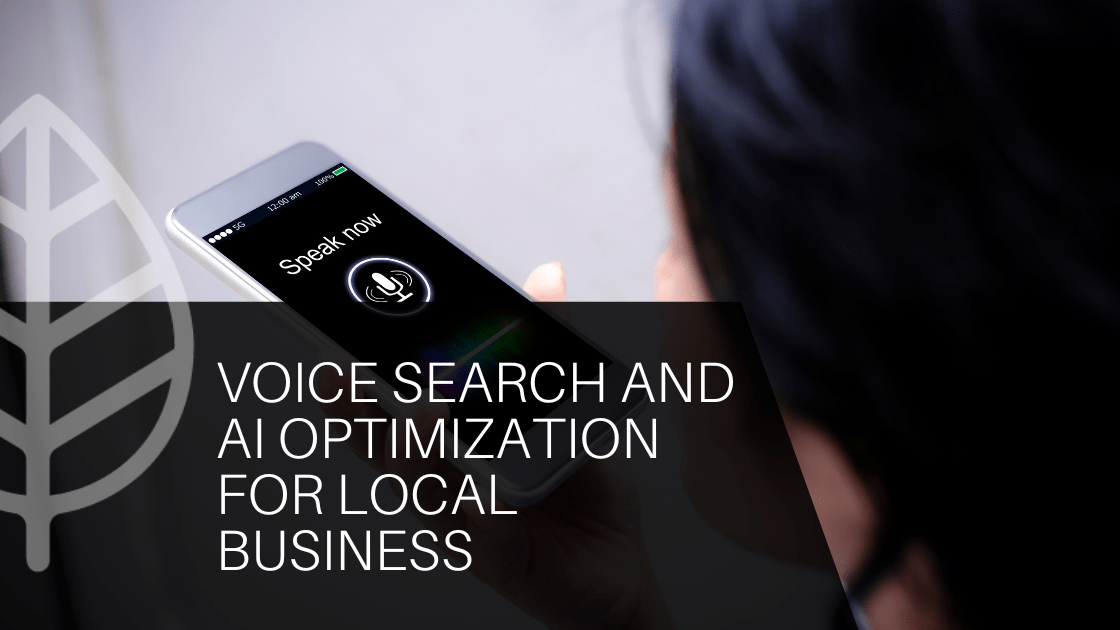
Voice Search And AI Optimization For Local Business

Think about how many times a day you find yourself reaching for your phone to look up something. Whether it be directions, restaurant recommendations, or fact-checking something you saw on Instagram, you probably use your phone for search more than you realize. As of 2026, over half of all internet traffic comes from mobile devices, according to Consumer Affairs. 

This is great news for businesses because they can connect with consumers wherever they go and whatever they are doing. No longer do you need a place with wifi to sit down with your computer if you want to look something up online. Features like data and voice search make it easy for users to search while on the go. 

Half of mobile users in the U.S. use voice search daily, and much of this traffic comes from AI assistants like Siri. 

Optimizing for voice search is becoming increasingly important for getting your business in front of users, especially as search becomes increasingly reliant on AI.


Voice Search SEO Can Connect Local Businesses With High-Intent Consumers

Imagine two users searching for restaurants in their area: one is searching on their laptop at home, and the other is using voice search while driving around town. Which one do you think is likely to commit to going to a restaurant first? Probably the one on the road.

Users often use voice search when they want an immediate, highly relevant answer. These users are high-intent and ready to convert, making them an incredibly valuable group to target.

The same factors that make these users ready to convert are also why a strong voice search SEO strategy is so important. Busy, multitasking users are likely to choose the first relevant answer they receive from their AI assistant. If you are not among the first few suggestions, you are not being considered.

But if you can get in those first few suggestions, you can unlock an audience of consumers ready to convert. 


Voice Search is Changing eCommerce

Voice search is impacting more than businesses with physical stores or local service providers; it is also changing how consumers shop online. 

In 2024, 22% of consumers were using voice search to make direct purchases through their AI assistants. That number has likely increased as AI has increasingly embedded itself in the consumer decision-making process. 

Consumers are using AI assistants to guide their purchasing decisions, largely interacting with them via voice search. Appearing in these search results will become increasingly critical for e-commerce businesses to connect with and attract consumers.


How to Optimize for Voice Search and AI Assistants

In many ways, the old rules of SEO still apply, especially as AI often scrapes top search results for information. Authority, relevance, and trustworthiness are important for appearing in both traditional search results and voice search results. 

For example, if someone does a voice search for a particular service and your business has an average rating of 3 stars out of 5, there is a good chance it will not appear on the first page. 

The main difference between traditional search and voice search lies in how users phrase their queries. Voice search queries tend to be more conversational and more clearly phrased as questions. This aligns with the trend we are seeing in AI searches, where queries are longer, more specific, and more natural-sounding than traditional searches. 

Adapting your SEO strategy for these longer, more conversational queries is critical for keeping up with changing search behavior. 

Working with a marketing company like the Ad Leaf that specializes in AI-friendly SEO strategies can help bring your website out of 2015 and into this new era of AI search. 


It Can Help With A Local Business Website Structure & Content Marketing

When a business has a website and is looking to build a content marketing strategy for voice search SEO, it should imagine being in the customer’s position. What questions might they ask?

When marketing, it is important to consider the consumer journey. At which point in the journey does the consumer see your marketing, and how can we move them further along that journey?

You want your content to guide the consumer toward a purchase decision. If they are using voice search SEO, you need to be the business that can answer all their questions and objections about why they need your products and services.

High-quality, relevant content optimized for voice search can help you, as a local business, be found on the first page of Google.


Appear in Voice Searches With The AD Leaf

The AD Leaf’s SEO and Content Marketing teams stay on top of evolving SEO trends and user search behavior, so that even in a shifting search landscape, your website reaches consumers.


Start ranking in voice searches with The AD Leaf

Creating an Intelligent Marketing Ecosystem: Integrating AI Virtual Assistants for Seamless User Experience

Creating an Intelligent Marketing Ecosystem: Integrating AI Virtual Assistants for Seamless User Experience

In the modern digital landscape, the “funnel” is no longer a linear path; it is an atmosphere. At The AD Leaf Marketing Firm, we describe the pinnacle of modern strategy as an intelligent marketing ecosystem. This is a self-sustaining environment where every digital touchpoint, from social media to your website, works in tandem to nurture a lead. At the heart of this evolution is the strategic integration of AI virtual assistants in marketing.

Gone are the days when a chatbot was a simple, “if-then” script that frustrated users more than it helped. Today, AI virtual assistants in marketing represent a sophisticated layer of artificial intelligence capable of natural language processing (NLP) and predictive behavior. For businesses looking to scale, these assistants are not just “add-ons”; they are the connective tissue that ensures a seamless customer interaction at any hour of the day.


The Shift Toward an Intelligent Marketing Ecosystem

An intelligent marketing ecosystem is defined by its ability to learn and adapt. Traditional marketing is reactive: you run an ad and wait for a click. In contrast, an AI-powered marketing ecosystem is proactive. When a user lands on your site after reading about the benefits of hiring an agency for your marketing, the AI assistant already understands the context of their visit.

By using marketing automation tools, we can map the user’s journey in real time. If the user stops on a service page for more than thirty seconds, the AI assistant can offer a case study or a consultation link. This isn’t just automation; it’s an enhancement of user experience that feels personal rather than programmed.


Enhancing User Experience Through AI

User experience (UX) is the ultimate currency of the web. Google’s latest algorithm updates place heavy emphasis on how users interact with your content. AI virtual assistants in marketing play a pivotal role here by providing immediate gratification.

Consider this: According to a study by Juniper Research, AI-powered chatbots and virtual assistants are projected to drive over $112 billion in retail sales by 2023. This staggering figure highlights that consumers aren’t just “okay” with AI; they are actively using it to make purchasing decisions. When you integrate AI virtual assistants into marketing, you remove the friction that often leads to cart abandonment or bounced sessions.


Seamless Customer Interaction and Voice Search

The rise of AI is intrinsically linked to how we search. As we have noted in our deep dive into voice search SEO for local businesses, more users are “talking” to the internet than ever before. AI virtual assistants in marketing bridge the gap between voice queries and website conversions.

When a user asks their phone, “Who is the best digital agency in Melbourne?” and lands on our site, our internal AI virtual marketing assistants can maintain that conversational tone. This creates a seamless customer interaction that mirrors a human conversation, which is critical for building trust in the high-stakes world of B2B and high-ticket B2C services.


Marketing Automation Tools: The Engine Room

To build a truly intelligent marketing ecosystem, you must look beyond the front-end chat bubble. The real power of AI virtual assistants in marketing lies in their integration with your CRM and marketing automation tools.

Every interaction a user has with an AI assistant provides data. This data should automatically flow into your content strategy. If your assistant reports that 40% of users are asking about “SEO pricing,” you know exactly how to enhance your content marketing strategy to address those specific pain points.


Why The AD Leaf?

At The AD Leaf Marketing Firm, we don’t just implement tools; we engineer results. Creating an intelligent marketing ecosystem requires a deep understanding of how AI virtual assistants in marketing interact with human psychology and search engine algorithms. Our team specializes in moving the needle for our clients by ensuring that every seamless customer interaction is backed by data-driven logic and creative excellence. We provide the “Human Element” that directs the AI, ensuring your brand remains authentic while becoming hyper-efficient.

How to Make Your Photos Pop for Social Media Marketing

Strong visuals drive modern digital success, yet many businesses still struggle with weak content and messaging that fails to connect with their audience. In today’s competitive digital space, brands must prioritize content writing, graphic design, marketing, and social media working together to build clarity and impact. At The AD Leaf Marketing Firm, we help businesses transform inconsistent visuals into powerful storytelling tools that improve targeting and performance.

Why Weak Visual Content Hurts Your Brand

Many businesses rely on inconsistent imagery that does not support their message. This leads to low social media engagement, unclear branding, and missed opportunities. Strong social media photography ensures your audience immediately understands your value, while strategic content writing strengthens that message across platforms. Without alignment, even high-effort campaigns fall flat.

Research from HubSpot shows that content with relevant images gets 94% more views than content without visuals, highlighting how essential strong visuals are for marketing success. This is where intentional visual marketing strategies make a measurable difference.

If your brand is struggling with inconsistent branding or underperforming posts, it’s time to rethink your approach. Strengthening your visual identity starts with improving your social media photography and applying structured photo enhancement tips that align with your audience.

Take the next step in refining your brand presence and improving your digital performance by exploring how integrated strategy improves results:

FRAMING AND COMPOSITION

Social Media MarketingThe “rule of thirds” is a rule of thumb in the composition of visual images such as photography, graphic designs and painting.  It can be applied to any subject to improve the composition and balance of your images to make your design more engaging. The rule of thirds involves mentally dividing up your image using 2 horizontal lines and 2 vertical lines. You then position the important elements in your scene along those lines, or at the points where they intersect.  You want to use the rule of thirds, both horizontally and vertically by placing  your subject in the right or left third of the photo–this stimulates the viewer to spend more time looking at your photo.  The idea is that an off-center composition is more pleasing to the eye and looks more natural than one where the subject is placed right in the middle of the frame. It also encourages you to make creative use of negative space, the empty areas around your subject.

If your photo is of a landscape, avoid putting the horizon line in the middle of the photo because this tends to make the photo feel like it’s split in two.  Instead, place the horizon line along one of the horizontal lines of thirds. Make sure any focal point of the picture is placed at one of the points where the horizontal and vertical lines meet to serve as an “anchor” for the image.

If your picture is of a person, remember that the eyes are where we are naturally drawn to, so put the eyes level with one of the horizontal lines of thirds or at one of the points where the horizontal and vertical lines intersect to make a much more interesting photo and not a “mug shot” (where the subject is centered in the middle of the frame).


Building Stronger Audience Targeting Through Visual Strategy

Effective marketing is not about posting more content; it is about posting the right content to the right audience. Weak content and messaging often come from not understanding audience behavior. When businesses invest in visual marketing strategies, they gain clarity on what resonates and what does not.

Social media photography plays a key role in this process. High-quality images tailored to your target demographic increase recognition and trust. Combined with strong content writing, brands can deliver messaging that feels intentional and consistent. This alignment improves social media engagement and ensures your audience stays connected.

We often see businesses overlook simple photo enhancement tips that dramatically improve results. Adjusting lighting, color balance, framing, and composition can elevate average content into eye-catching images that stop the scroll. When paired with strategic content writing, these visuals become powerful communication tools that drive social media engagement.

At The AD Leaf Marketing Firm, we encourage brands to treat every post as a strategic opportunity. Strong visual marketing strategies ensure your audience understands your value immediately, without confusion or distraction.

Creating High-Quality, Consistent Content That Converts

Consistency is the foundation of strong digital performance. Businesses that prioritize high-quality, consistent content outperform those that post sporadically or without strategy. Consistency builds trust, improves recognition, and strengthens social media engagement over time.

Social media photography should follow a unified style guide that reflects your brand identity. This includes tone, color palette, composition, and message alignment. When combined with content writing, your brand voice becomes recognizable across all platforms.

Using structured photo enhancement tips helps maintain quality standards across all posts. Even small adjustments can turn average visuals into eye-catching images that improve engagement rates. Strong visual marketing strategies ensure that every piece of content serves a purpose, whether it is awareness, engagement, or conversion.

Businesses that integrate these practices also see improved performance in cross-channel efforts. Learn how social media and SEO work together to strengthen visibility:
Social Media and SEO Strategy

To improve results further, brands must focus on social media engagement as a performance indicator, not just a vanity metric. Engagement reflects how well your content resonates with your audience and how effectively your messaging communicates value.

Turning Visuals Into Engagement-Driven Marketing Assets

Every piece of content you publish should support your broader marketing goals. Social media photography is not just about aesthetics; it is about communication. When paired with strong content writing, your visuals can guide users through a clear journey that supports conversion.

Businesses that use intentional visual marketing strategies consistently outperform those that do not. These strategies ensure that eye-catching images are not random but purposeful. Each post should support brand awareness, trust-building, or direct engagement.

Photo enhancement tips also play a critical role in maximizing performance. Simple improvements like sharpening details, adjusting contrast, or optimizing composition can significantly increase social media engagement. Over time, these improvements compound and build a stronger digital presence.

We also recommend evaluating performance regularly to understand what drives engagement. Patterns in social media photography can reveal what your audience prefers, helping you refine future content writing and visual marketing strategies.

Strengthening Messaging With Better Content and Design Alignment

Weak content and messaging often stem from misalignment between design and communication. When graphic design, content writing, and marketing operate separately, the result is confusion for the audience. Strong visual marketing strategies solve this by aligning all creative elements under one direction.

Eye-catching images alone are not enough. They must be supported by messaging that reinforces your brand’s value. This combination increases social media engagement and builds trust with your audience over time.

Applying structured photo enhancement tips ensures that every image supports your message. Meanwhile, consistent social media photography builds recognition across platforms. Together, these elements create a cohesive experience that strengthens your brand identity.

Why The AD Leaf

At The AD Leaf Marketing Firm, we help businesses transform weak content and messaging into powerful, results-driven campaigns. Our approach combines content writing, graphic design, marketing, and social media into one unified strategy that prioritizes clarity, consistency, and performance.

We focus on developing high-quality, consistent content supported by strong visual marketing strategies that elevate your brand presence. Through expert social media photography, advanced photo enhancement tips, and data-driven planning, we create eye-catching images that improve social media engagement and strengthen audience targeting.

If your business is ready to improve its digital presence, now is the time to act.